
Coastal Roof Maintenance for Salt-Air Homes
On this page
Quick answer
Coastal roof maintenance means checking how salt air, wind, sand, humidity, and fast-moving storms affect shingles, flashing, gutters, fasteners, vents, and roof edges. Homeowners can watch for corrosion, lifted shingles, clogged gutters, staining, and loose trim from the ground. Schedule professional inspections more often when the home sits close to saltwater or exposed wind.
Why coastal roofs age differently
Coastal roofs are exposed to more than ordinary rain. Salt carried by ocean air can settle on metal components, while wind-driven moisture can push water into roof edges and flashing details. Sand, humidity, and intense sun can also speed wear on finishes, sealants, and exposed fasteners.
This does not mean every beach-area roof fails early. It means the maintenance rhythm should be more observant, especially around gutters, flashing, vents, skylight edges, and roof-to-wall transitions.

Red Cedar Roofing and Siding
FleetwoodBerks CountyPennsylvania
207 S View Rd, Fleetwood, PA 19522, USA
Ground-level checks after salty weather
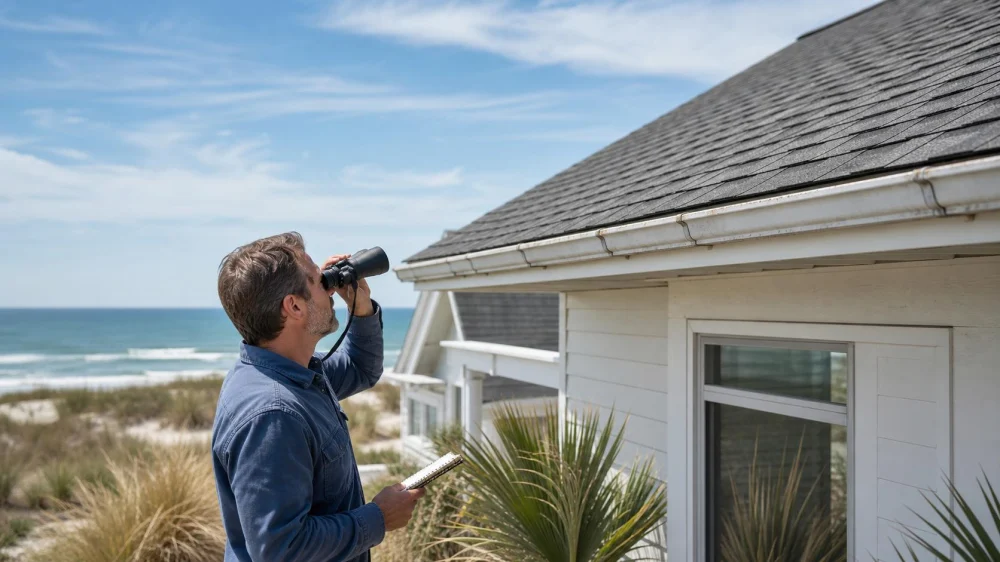
Use binoculars or a phone camera zoom and stay safely on the ground. After windy rain, humid salt air, or heavy coastal weather, look for changes that were not visible before.
- Lifted or uneven shingles: wind can loosen edges before a visible leak appears.
- Rust or staining near metal: gutters, flashing, fasteners, and vent covers can show early corrosion.
- Granule buildup in gutters: some granule loss is normal, but heavy accumulation deserves attention.
- Overflowing gutters: sand, leaves, and roof debris can block drainage faster in exposed locations.
- Dark streaks or damp siding: repeated runoff can point to poor drainage or gutter leaks.
- Loose fascia or trim: wind and moisture can stress roof-edge boards and seams.
Gutter and metal component care
Salt air often shows up first on metal. Gutters, brackets, fasteners, drip edge, roof vents, and flashing should be checked for rust, loose connections, and discoloration. Rinsing accessible exterior surfaces may help reduce salt buildup, but roof work and high gutters should be left to trained professionals.
If corrosion appears repeatedly in one area, the issue may be material choice, drainage pattern, coating failure, or exposure. A local roofing contractor can help determine whether repair, replacement, or upgraded materials make sense.
Best for and not ideal for
This guide is best for homeowners near coastal or salt-air environments who want practical roof care habits without climbing onto the roof.
It is not ideal for diagnosing hidden leaks, choosing code-required roofing materials, handling storm insurance claims, or replacing flashing. Those decisions need qualified local guidance.
Coastal maintenance checklist
- Walk around the home after major wind or rain events.
- Photograph roof edges, gutters, vents, and visible flashing from the ground.
- Watch for rust stains, loose trim, gutter leaks, or recurring overflow.
- Keep trees and vegetation from trapping moisture against roof edges.
- Have gutters cleaned safely when debris blocks drainage.
- Schedule periodic roof inspections with a contractor familiar with coastal conditions.
- Save dated photos so changes are easier to compare over time.
When to call a roofing contractor
Call a professional if you see missing shingles, recurring gutter overflow, corrosion around flashing, ceiling stains, loose roof-edge trim, or water entering the home. Also call after severe coastal storms or when the roof is too high, steep, or exposed to inspect safely from a ladder.
Important notes
- This is general United States homeowner guidance, not a substitute for a local roof inspection.
- Do not walk on a roof to check salt-air damage.
- Coastal building requirements may differ by state, county, wind zone, and local code.
- Material warranties and maintenance expectations can vary by manufacturer.
FAQ
Does salt air damage roof shingles?
Salt air is usually more obvious on metal parts, but coastal exposure can also contribute to faster wear around roof edges, sealants, vents, and drainage details.
How often should a coastal roof be inspected?
Many coastal homeowners benefit from more frequent visual checks and periodic professional inspections, especially after strong wind, heavy rain, or visible corrosion.
Can I rinse salt off my roof?
Do not climb or pressure-wash the roof. If salt buildup or staining concerns you, ask a roofing professional about safe cleaning and maintenance methods for your roof type.
What roof parts corrode first near the beach?
Gutters, fasteners, flashing, vent covers, brackets, and drip edge often show corrosion before the main roof surface does.
Evidence notes
This guidance reflects common roof maintenance practice for salt-air and wind-exposed environments: protect drainage, monitor metal components, avoid unsafe roof access, and use local professional evaluation for repairs.
Next steps
Walk the property after the next windy or wet day, photograph roof edges and gutters, and note any rust, staining, or loose materials. If the same issue appears again, contact a local roofing contractor who understands coastal roof conditions.




 Leak No More4.0 (62 reviews)
 1st Choice Roofing5.0 (7 reviews)
 Goldstone General Construction3.0 (2 reviews)
 American Custom Contractors5.0 (3 reviews)
 Marty Construction LLC4.0 (25 reviews)
 Accomplished Chimney3.0 (61 reviews)
 The Lifespan of a Roof in an Area with High Seismic Activity and Movement
 How to Install a Roof Vent for a Gas Water Heater or Furnace
 The Cost of a Roof Replacement with a Custom-Fabricated Metal Roof System: What You Need to Know
 What is a Roofing Contingency in a Home Purchase Contract?
 Wasp Nests in Roof Vents Safe Removal Without Roof Damage
 Tile Roof Repair: How to Handle Cracked and Broken Tiles