
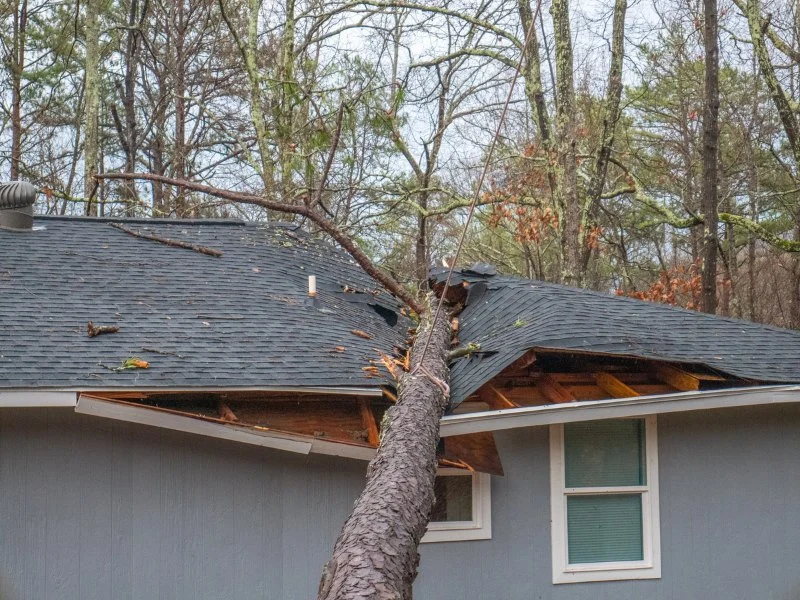
How to Handle Roof Damage Caused by Fallen Tree Branches
- What to Do Immediately After Tree Branches Damage Your Roof
- How to Assess the Extent of Roof Damage
- Steps to Repair Roof Damage from Fallen Tree Branches
- How to Prevent Tree Branch Damage to Your Roof
What to Do Immediately After Tree Branches Damage Your Roof
When a tree branch falls on your roof, it can cause significant damage, ranging from minor dents to major structural issues. The first thing you should do is stay safe—never attempt to remove the branch yourself unless it is safe to do so. Tree branches can be heavy and pose a risk of injury or further damage.
Here are the first steps you should take:
- Ensure Safety: Check that there are no power lines involved or signs of electrical damage before approaching the affected area. If you’re unsure, it’s best to stay at a safe distance and call professionals.
- Document the Damage: Take photos of the damage to your roof and the fallen tree branch. This documentation will be crucial if you need to file an insurance claim.
- Contact a Professional: Reach out to a roofing contractor or emergency repair service immediately. They will have the tools and expertise to safely assess and remove the branch, and start repairs if necessary.
How to Assess the Extent of Roof Damage
Once the initial shock has subsided and the branch has been safely removed, it’s important to assess the damage to your roof. This can help you determine whether it’s a minor issue that can be fixed quickly or a more serious problem that requires extensive repairs. Here’s how to assess the damage:
- Inspect the Roof from the Outside: If possible, safely look at your roof from the ground or use a ladder to inspect it closely. Look for any visible signs of damage, such as broken shingles, dents, or holes. Pay particular attention to the areas around the impact zone.
- Check for Leaks Inside: Go into your attic or upper floors and check for water damage. If you notice any signs of leaks, this could indicate more significant damage to the roof’s structure that requires immediate attention.
- Evaluate the Severity: If the damage seems contained to a few broken shingles, it may be a minor repair. However, if there’s significant structural damage to your roof deck or the underlying framework, it’s best to call a professional for a full assessment and repair.
Steps to Repair Roof Damage from Fallen Tree Branches
Once the damage has been assessed, it’s time to start repairs. If the damage is minor, you might be able to handle the repairs yourself. However, for more serious damage, hiring a professional roofing contractor is the best course of action. Here’s a step-by-step guide for both scenarios:
For Minor Damage
If your roof damage is minor, you may only need to replace a few broken or missing shingles. Here’s what you can do:
- Remove Damaged Shingles: Carefully remove the broken or damaged shingles using a pry bar. Be sure to avoid damaging the surrounding shingles as you work.
- Install Replacement Shingles: Place new shingles over the exposed area. Make sure they are aligned properly and securely fastened using roofing nails.
- Seal the Edges: Use roofing cement to seal the edges of the new shingles, ensuring they are secure and watertight.
For Major Damage
If the damage is more extensive, such as structural damage to the roof deck, it’s important to hire a professional roofing contractor. They will inspect the damage in detail and may need to replace the roof deck or other structural components. The repair process could involve:
- Removing Damaged Materials: The damaged sections of the roof will be removed, including shingles, decking, and insulation.
- Replacing the Roof Deck: If the deck has been compromised, a new one will need to be installed to provide a solid foundation for the new shingles.
- Installing New Shingles: After the structural repairs, new shingles will be installed. The new roof will be sealed and weatherproofed to prevent future damage.
How to Prevent Tree Branch Damage to Your Roof
Once your roof is repaired, taking steps to prevent future tree branch damage is essential. Here are some proactive measures you can take to protect your roof:
- Trim Overhanging Branches: Regularly trim any branches that hang over your roof, especially if they are close to the structure. This will reduce the risk of branches falling during storms or high winds.
- Inspect Trees Regularly: Keep an eye on the health of the trees around your home. Dead or weak branches are more likely to fall and cause damage. Consider hiring a professional arborist to assess the health of your trees.
- Install Gutter Guards: Installing gutter guards can help prevent leaves and small branches from accumulating in your gutters, which can cause water backup and potential roof damage.
If you’re dealing with roof damage from fallen tree branches or want to learn more about protecting your roof from future damage, visit BeachCo Roofing Hub for expert advice and top-quality roofing services.


 J & J Home Improvements3.0 (7 reviews)
 Coldsmith Roof & Home Impvmnt5.0 (6 reviews)
 Peter Desalvo Contracting, LLC4.0 (125 reviews)
 Hernandez & Sons Roofing4.0 (48 reviews)
 DMV Roofing Services, LLC5.0 (21 reviews)
 Winchester Roofing5.0 (52 reviews)
 What is a Roofing Project Completion Certificate? For Insurance and Records
 The Pros and Cons of a Cold-Applied Roof Membrane System | BeachCo Roofing Hub
 How to Install Roof Snow Fences to Control Drifting – A Step-by-Step Guide
 The Lifespan of a Roof in an Area with Frequent Temperature Swings | BeachCo Roofing Hub
 How to Install a Roof Access Hatch for Easy Attic Entry
 How to Handle Roof Damage Caused by Fallen Tree Branches