Roof Repair Material Match: Product, Age, Colour, and Compatibility
On this page
Quick answer
Before a local roof repair, ask the contractor to identify the existing roofing type, manufacturer and product when possible, profile, dimensions, colour blend, installation method, age, underlayment, flashing, and warranty constraints. A replacement piece that looks close on the ground may differ in thickness, exposure, fastening pattern, material chemistry, or wind and fire classification. Approve compatibility first and appearance expectations second.
An exact visual match may be impossible on an aged roof because weathering, fading, granule loss, discontinued products, and production-lot differences change colour over time.
Identify the existing roof system
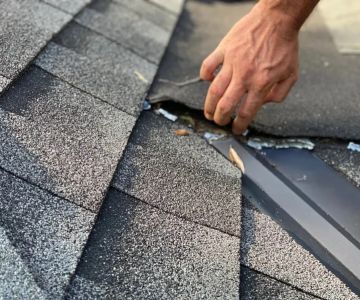
Use purchase records, prior invoices, warranty documents, leftover bundles, permit files, and contractor inspection. Do not climb onto the roof or remove material to search for markings. A qualified roofer may compare dimensions and construction with current products or arrange laboratory or manufacturer help for a difficult match.
- Roofing material and product line.
- Nominal size, profile, thickness, and installed exposure.
- Colour name and blend, if documented.
- Fastening and sealing requirements.
- Underlayment, flashing, vents, and adjacent materials.
Set realistic appearance expectations
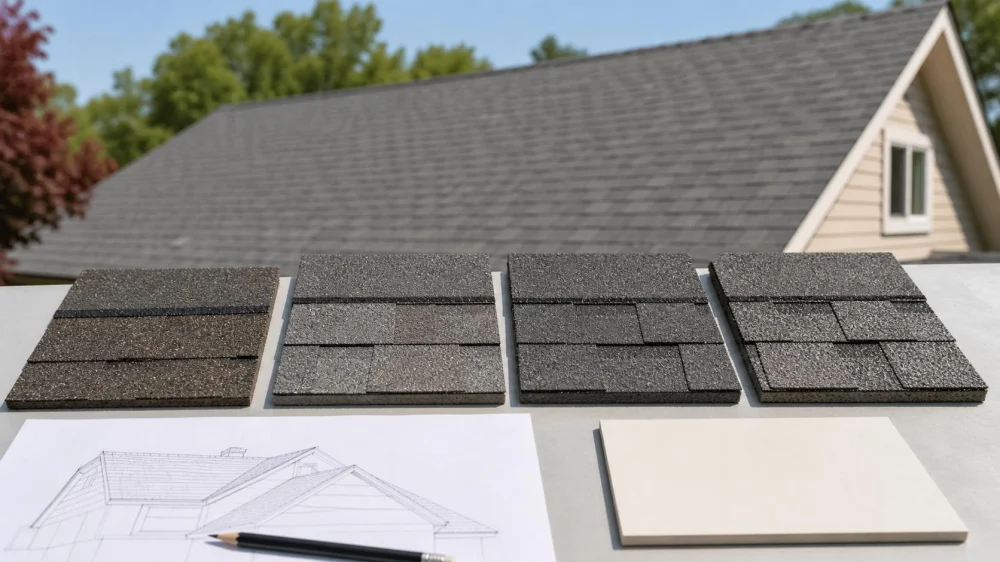
View proposed samples outdoors at the house in sun, shade, and overcast conditions. Compare from normal ground-level viewing distances, not only under indoor showroom light. Ask whether the repair will be a concentrated patch, a larger blended area, or a complete slope replacement.
New roofing may weather toward the existing colour, but no contractor should promise an invisible result without a documented basis. Photograph and sign off on the agreed expectation.

DCF Contracting
GainesvillePrince William CountyVirginia
13255 University Blvd, Gainesville, VA 20155, USA
Check system compatibility
Mixing products can affect alignment, drainage, fastening, seals, ventilation details, and warranties. Metal compatibility also matters where flashing, fasteners, and runoff contact one another. Ask the contractor to follow current manufacturer instructions and locally adopted code for the repair assembly.
If the original product is discontinued, request written options and tradeoffs rather than accepting the nearest colour alone.
Approve samples and repair boundaries
- Mark the repair area on a ground-level photo or roof diagram.
- Identify material to be removed and retained.
- Review a physical sample or documented product.
- Confirm transition details at valleys, ridges, walls, and penetrations.
- Set expectations for visible colour and profile differences.
- Approve added work through a written change process.
Ask what happens if tear-off reveals a larger incompatible or damaged area.
Keep useful product records
Save the final invoice, manufacturer, product line, colour, lot or production information when available, quantity installed, repair photos, warranty terms, and leftover pieces. Store spare materials dry and supported according to manufacturer guidance.
Future owners and contractors can use the record for later repairs, warranty questions, and roof replacement planning.
Important limitations
This is general U.S. homeowner information, not design, code, warranty, insurance, or product advice for a specific roof. Compatibility and repair feasibility vary by roof system, climate, jurisdiction, manufacturer, damage, and age. Use a qualified contractor and applicable manufacturer instructions.
Evidence notes
The framework separates identification, technical compatibility, appearance, repair boundaries, and records. Colour is only one attribute; dimensions, fastening, water management, material interaction, and warranties determine whether a product is a responsible match.
FAQ
Will new shingles match an old roof?
Not necessarily. Aging, weathering, lot differences, and discontinued colours can make repairs visible.
Can a contractor use another brand with the same colour?
Only after confirming dimensions, installation, system compatibility, code, and warranty implications.
Should I approve a photo or physical sample?
A physical sample at the house is more useful, supported by exact product documentation.
What if the product is discontinued?
Ask for written repair and replacement options with technical and appearance tradeoffs.
Should I keep leftover shingles?
Yes when practical, stored according to manufacturer guidance with identifying records.
Next steps
Gather existing roof records, have the contractor identify the system, review a sample outdoors, mark the repair boundary, document compatibility and appearance expectations, and save final product details.

 Asset Roofing & Chimney5.0 (18 reviews)
 ShingleStar Roofing5.0 (5 reviews)
 AED Roofers Water Proofers5.0 (3 reviews)
 Plescia Building Maintenance4.0 (7 reviews)
 Ashmen Installations Inc.4.0 (6 reviews)
 AR Contracting & Services Corp4.0 (19 reviews)
 How to Choose a Roofing Contractor That Handles Insurance Claims – Expert Tips
 The Best Roofing Shampoo Products for DIY Cleaning That Actually Work
 How to Install Roof Snow Guards on a Metal Roof: A Complete Guide
 How to Get Your Roof Ready for a Home Appraisal to Boost Value
 How to Install a Roof Underlayment for a Synthetic Slate Roof: A Complete Guide
 How to Install a Roof Underlayment on a Low Slope Roof