
How to Keep Pets Safe During Roof Repair Work
On this page
Quick answer
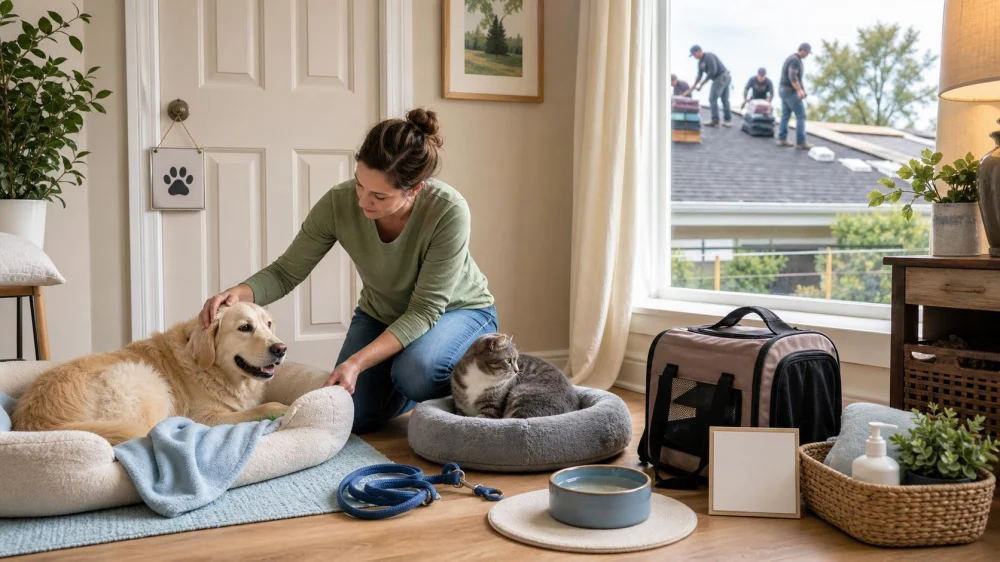
Before roof repair, tell the contractor about every pet and ask for the work hours, access points, delivery zones, debris plan, and loudest phases. The safest option for many animals is a trusted off-site location. If a pet remains home, use a secure interior room away from work and attic access, display a door notice, maintain identification, and assign one adult to all feeding, medication, walks, and handoffs.
Never leave a pet loose in the yard or near workers, ladders, vehicles, roofing materials, nails, or falling debris.

Understand the main pet risks
Roofing can produce sudden impact noise, vibration, unfamiliar voices, open gates, moving trucks, strong odors, dust, sharp fasteners, hot materials, and falling objects. Frightened animals may hide, bolt, scratch doors, stop eating, or react defensively.
Birds, reptiles, small mammals, older pets, and animals with heart, breathing, mobility, or anxiety conditions may have special temperature, ventilation, and stress needs. Discuss individual health concerns with a veterinarian before work starts.
BGC Contracting, LLC.
Mount RainierPrince George's CountyMaryland
3600 Rhode Island Ave, Mt Rainier, MD 20712, USA
Coordinate with the roofing contractor
Give the project lead one pet contact and a written note stating where animals will be. Ask workers not to open specified doors or gates, feed pets, or move crates. Confirm whether the crew needs attic, garage, electrical, driveway, or backyard access.
Ask when tear-off, decking repair, material delivery, magnetic nail collection, and daily cleanup will occur. Work schedules can change with weather and hidden damage, so request an end-of-day update.
Choose an appropriate safe location
For off-site care, use a familiar trusted person, veterinary boarding, or suitable facility and provide medicines, feeding instructions, identification, emergency contacts, and the expected pickup window.
For at-home care, choose a room with a secure door, comfortable temperature, water, bedding, litter or toileting plan, and background sound the pet already tolerates. Keep the room away from ceiling work and avoid blocking an exit. Do not introduce an unfamiliar crate for the first time on workday.
Manage the workday routine
Exercise or settle the pet before workers arrive when appropriate. Verify collars, tags, microchip contact details, carriers, leashes, and gates. Move pet food, bowls, medicines, toys, and waste supplies away from construction access.
Use a written handoff so one adult knows whether the pet is inside, off-site, or on a supervised walk. Do not let the animal out during breaks unless the project lead confirms the route and yard are safe.
Check the property after work
Wait for the contractor to declare the work area open. Inspect from ground level for nails, metal pieces, plastic film, packaging, food scraps, sharp shingle fragments, open gates, damaged fencing, and spilled liquids. Ask about the daily magnetic sweep but perform a careful visual check too.
Keep pets away from dumpsters, stacked materials, tarps, ladders, and equipment even after the crew leaves. Watch for unusual behavior, coughing, vomiting, limping, mouth injury, or possible ingestion and contact a veterinarian promptly when concerned.
Pet safety checklist
- Tell the contractor about every animal.
- Choose off-site or secure indoor care.
- Confirm schedule, access, noise, and debris zones.
- Update tags, microchip, and emergency contacts.
- Assign one adult to the pet plan.
- Post clear door and gate instructions.
- Inspect the property before outdoor access.
- Monitor behavior and possible exposure.
Limitations and urgent notes
- This guide is not veterinary advice or a contractor safety plan.
- Never enter a cordoned area or climb onto a roof to retrieve a pet.
- Suspected nail, chemical, roofing material, or foreign-object ingestion needs urgent veterinary guidance.
- Heat, cold, fumes, power loss, and ventilation changes can make an indoor room unsuitable.
- Emergency response takes priority over keeping a normal pet routine.
Frequently asked questions
Can my dog stay in a basement?
Only if it is secure, temperature-controlled, ventilated, familiar enough, and away from required access and falling dust or debris.
Will music cover roofing noise?
Familiar background sound may help some pets but will not remove vibration or sudden impact noise. Keep volume comfortable.
Can workers watch my pet?
Do not assume so. Arrange a responsible caregiver who is not performing construction work.
When can pets use the yard again?
After the contractor opens the area and a responsible adult checks gates, fencing, debris, nails, and equipment.
What if my pet is extremely anxious?
Contact a veterinarian before the project to create an individualized plan; do not give unprescribed medication.
Sources and evidence notes
This framework uses construction-access and animal-care controls: identify hazards, separate animals from work, assign responsibility, maintain secure identification, coordinate schedule changes, and inspect before reentry. The contractor and veterinarian should guide project-specific and pet-specific decisions.
Choose the pet plan now
Contact the roofer for the expected schedule and loudest work period. Decide where each pet will stay, name one caregiver, update identification, and write door, gate, medication, and emergency instructions before materials arrive.
 Thermoseal Roofing NY5.0 (1 reviews)
 CCM Roofing LLC2.0 (3 reviews)
 CL ROOFING COMPANY5.0 (13 reviews)
 Ashburn Roofing5.0 (176 reviews)
 Busy Bee Roofing LLC5.0 (23 reviews)
 USA General Contractors Corp.4.0 (48 reviews)
 What is a Roofing Material Lead Time for Custom Orders? Planning Ahead
 How to Choose a Roofing Material for a Noisy Urban Environment
 How to Install Roof Snow Guards on a Tile Roof for Winter Safety
 How to Repair a Roof Leak from a Rooftop Water Feature or Pond
 The Average Cost of a Roof Warranty Transfer When Selling a Home
 How to Repair a Roof Leak in a Building with a Living Green Roof