
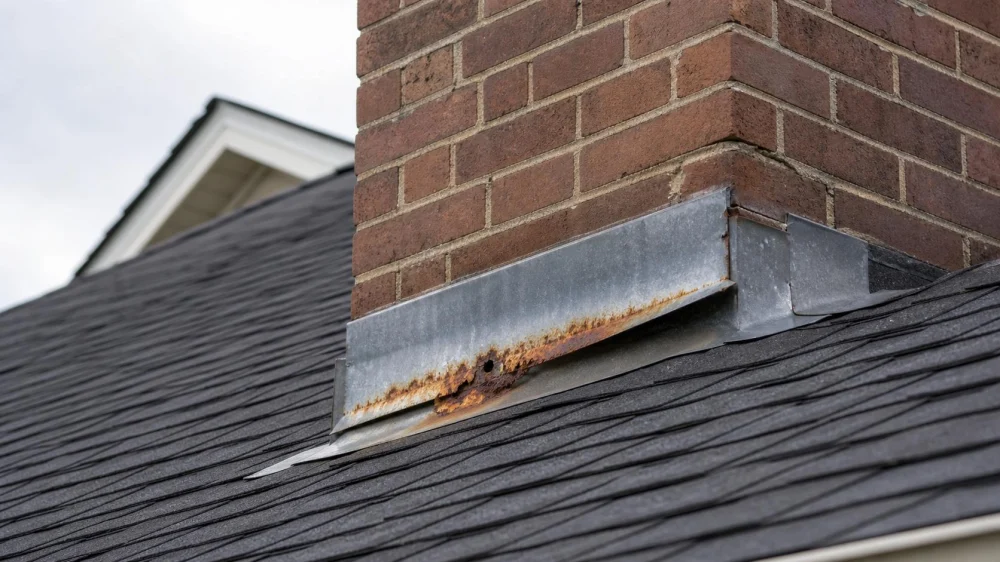
Roof Flashing Rust: What Homeowners Can Check Safely
On this page
Quick answer
Rust-colored roof flashing needs evaluation, but discoloration alone does not reveal the remaining metal thickness or leak risk. From the ground, document the location, spread, holes, lifted edges, sealant failure, and nearby stains. Check safe interior areas for moisture. Do not climb, sand, paint, or seal flashing yourself. A roofer should identify the metal, water path, compatible materials, and hidden damage before recommending coating or replacement.
Where roof flashing is used
Flashing directs water at transitions and penetrations where roof covering alone cannot provide the complete detail. Common locations include:
- Chimney bases and corners
- Roof-to-wall intersections
- Valleys
- Skylights and roof hatches
- Plumbing vents and other penetrations
- Eaves and rakes
- Changes in roof slope
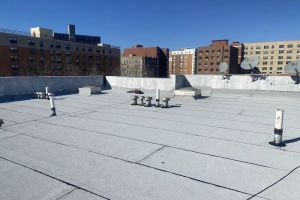
- Parapets, curbs, and low-slope roof edges
Materials may include galvanized steel, coated steel, aluminum, copper, lead-coated products, stainless steel, or compatible proprietary components. The correct detail depends on roof system, climate, adjacent materials, and code.
Surface staining versus metal loss
Orange or brown color may come from the flashing itself, a nearby fastener, runoff from another metal, or debris. A professional needs to determine whether the condition is:
- Surface oxidation: Early corrosion with much of the metal section still present
- Coating failure: Galvanizing or factory finish has worn, scratched, or peeled
- Pitting: Localized cavities reduce thickness and can progress to pinholes
- Perforation: Holes or split edges allow direct water entry
- Fastener corrosion: A screw or nail rusts while the broader flashing remains sound
- Runoff staining: Rust from an upper component deposits on lower material
Photographs cannot confirm remaining thickness or conditions concealed beneath shingles, siding, masonry, sealant, or membrane.
Why flashing corrodes
- Long exposure after protective coatings deteriorate
- Standing water, trapped debris, or poor drainage
- Salt air, industrial pollutants, or chemical exposure
- Scratches and cut edges left unprotected
- Incompatible metals that accelerate galvanic corrosion when moisture is present
- Acidic runoff from some materials or treatments
- Wet mortar, masonry interaction, or persistent condensation
- Sealant that traps water instead of preserving intended drainage
Rust is not always the original defect. Water may first be held by a failed lap, blocked drainage path, loose counterflashing, deteriorated roof covering, or movement at a joint.
Checks from the ground and indoors
Use binoculars or a zoom camera from stable ground. Compare current images with older photographs if available. Record:
- The precise roof feature and side of the building
- Whether staining is localized or follows a runoff path
- Visible holes, open seams, lifted metal, or loose counterflashing
- Cracked, missing, smeared, or separated sealant
- Nearby shingle, siding, masonry, or membrane damage
- Changes after ordinary rain
Indoors, look for ceiling or wall discoloration, damp trim, peeling paint, musty odor, or attic staining near the same feature. Enter an attic only when flooring, lighting, access, temperature, wiring, insulation, wildlife, and air quality are safe. Never walk between framing members.
Keep people away from falling metal or masonry. Active water near electrical equipment, a sagging ceiling, fire, or structural movement requires urgent professional help.
What to ask a roofing contractor
Request a written, photographed assessment from a qualified and insured contractor familiar with the roof system. Ask:
- What metal and protective finish are present?
- Is corrosion superficial, pitted, or perforated?
- What caused water or contaminants to remain there?
- Are adjacent metals and fasteners compatible?
- Does the flashing extend correctly beneath the roof and wall materials?
- Is roof deck, wall sheathing, framing, masonry, or insulation damaged?
- Will repair disturb siding, shingles, masonry, or membrane?
- What manufacturer, code, permit, and warranty requirements apply?
For a chimney, both a roofer and qualified masonry contractor may be needed. One trade should not hide the other's damaged work with sealant.
Repair, coating, or replacement
Very limited surface corrosion on accessible, adequately thick metal may sometimes be prepared and coated using a compatible system. That is a professional specification, not simply applying household paint over rust.
Replacement is more likely when metal is perforated, deeply pitted, incorrectly lapped, incompatible, too short, loose, or concealed damage requires access. A complete scope may include:
- Temporary weather protection
- Removal of surrounding roof or wall material
- Deck, sheathing, framing, or masonry repair
- New underlayment and correctly formed flashing
- Compatible fasteners, sealants, and separation layers
- Restoration of shingles, membrane, siding, or counterflashing
- Final water-shedding review and photographs
Ask how new metal will be integrated, not merely placed over the visible stain.
Unsafe shortcuts to avoid
- Walking on the roof to scratch-test rust
- Leaning a ladder on gutters or corroded metal
- Wire-brushing, grinding, or cutting without identifying coatings and exposure hazards
- Painting over wet corrosion or active leaks
- Covering every seam with roof cement
- Mixing metals without checking compatibility
- Pressure-washing flashing and forcing water beneath laps
- Replacing visible metal while leaving rotten deck or wall material
Frequently asked questions
Does rusty flashing always leak?
No, but corrosion can progress and may signal trapped water or failed detailing. A professional should check thickness, laps, and hidden conditions.
Can rust stains come from nails?
Yes. A corroding fastener can create a narrow stain. Its compatibility, sealing, and holding power still need evaluation.
Can flashing be painted?
Some metals and conditions accept properly prepared compatible coatings. Paint is not a repair for holes, bad laps, active leakage, or unsuitable metal.
Why does flashing rust near a chimney?
Moisture, masonry contact, debris, failed counterflashing, incompatible materials, and runoff can contribute. The roof and masonry details should be assessed together.
How urgent is a small rust spot?
Schedule inspection before it expands. Seek faster help for active leakage, visible holes, loose material, ceiling sagging, or water near electricity.
Conclusion and next steps
Photograph rust from the ground, trace visible runoff, check safe interior areas, and protect people from loose material. Have a qualified contractor identify the metal, corrosion depth, water source, compatibility, and hidden damage. Correct detailing and drainage first; then choose a documented coating or replacement system that fits the complete roof assembly.

 Thermoseal Roofing NY5.0 (1 reviews)
 CCM Roofing LLC2.0 (3 reviews)
 CL ROOFING COMPANY5.0 (13 reviews)
 Ashburn Roofing5.0 (176 reviews)
 Busy Bee Roofing LLC5.0 (23 reviews)
 USA General Contractors Corp.4.0 (48 reviews)
 What is a Roofing Material Lead Time for Custom Orders? Planning Ahead
 How to Choose a Roofing Material for a Noisy Urban Environment
 How to Install Roof Snow Guards on a Tile Roof for Winter Safety
 How to Repair a Roof Leak from a Rooftop Water Feature or Pond
 The Average Cost of a Roof Warranty Transfer When Selling a Home
 How to Repair a Roof Leak in a Building with a Living Green Roof