Roof Work Around Chimneys: Who Checks What
On this page
Quick answer
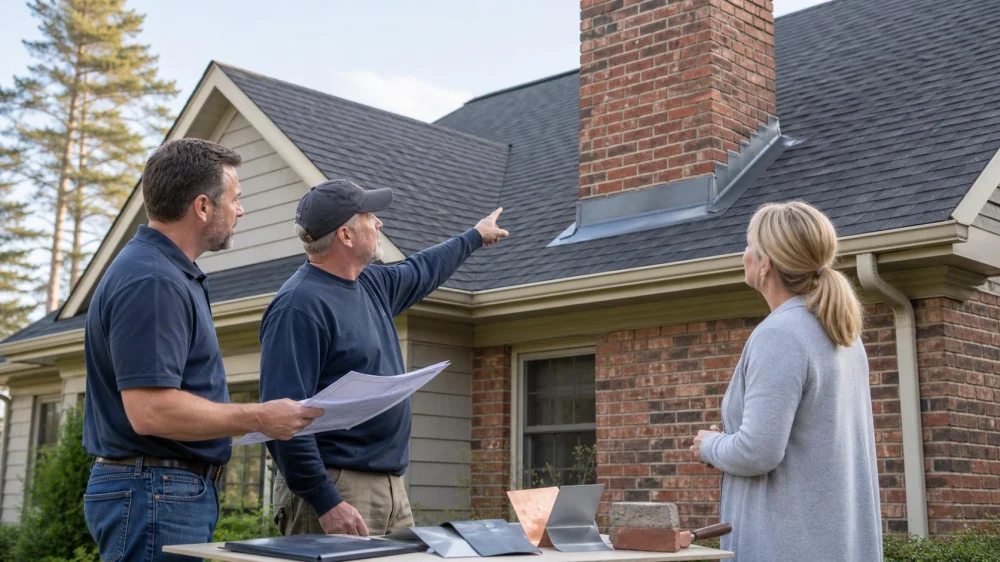
Before roofing around a chimney, separate the roof-water work from the chimney and venting work. A roofer typically evaluates shingles or membrane, underlayment, roof decking, and flashing integration. A qualified chimney professional evaluates the chimney exterior, crown or chase cover, cap, masonry, liner, clearances, flues, and connected appliances as applicable. Share both reports and agree on repair order before either system is covered.
This U.S. homeowner guide explains coordination, not trade licensing or a specific inspection level. Chimney type, fuel, appliance, listing, roof system, code, and jurisdiction determine the qualified scope.
Why two systems meet at the chimney
A chimney passes through or beside the roof, creating a transition where water management, structure, masonry or factory-built components, fire safety, and venting interact. A stain near the chimney can come from flashing, crown cracks, masonry absorption, a damaged cap, condensation, liner issues, or another source.
Flashing is the metal or approved material that directs roof water around the chimney-roof joint. It can include step flashing, base flashing, counterflashing, cricket or saddle details, and sealants used only where appropriate. Flashing repair does not automatically repair a deteriorated flue liner or crown.
Likewise, repointing mortar or adding a cap does not automatically correct poorly integrated roof flashing. The project needs clear ownership at every transition.
Master Pro Roofing & Masonry
MaywoodBergen CountyNew Jersey
162 E Fairmount Ave, Maywood, NJ 07607, USA
What the roofer typically evaluates
- condition and layout of shingles, tiles, metal, or low-slope membrane near the chimney;
- underlayment and visible roof decking after removal;
- base, step, apron, counterflashing, and sidewall integration;
- up-slope water flow and whether a cricket or saddle detail applies;
- fastener placement, laps, sealant condition, and compatible metals;
- roof drainage, debris accumulation, and nearby penetrations;
- temporary weather protection while work is open.
The roofing contract should state whether counterflashing is replaced, reused, cut into masonry, surface-mounted, or handled by another trade. “Flash chimney” is too vague when several layers and responsibilities are involved.
What a chimney professional evaluates
Depending on chimney type and inspection scope, a qualified chimney professional may examine:
- exterior masonry, mortar joints, crown, wash, cap, rain cover, or chase cover;
- factory-built chimney sections, supports, storm collar, termination, and listed components;
- accessible flue liner condition, obstructions, deposits, and connections;
- clearance to combustible materials and visible signs of heat or water damage;
- connected fireplace, stove, furnace, or other vented appliance components;
- whether a different inspection level is appropriate after a change, damage, or incident.
Tell the professional about leaks, chimney fires, appliance changes, storm damage, odours, smoke entry, falling masonry, animals, or previous repairs. Do not use a chimney after a suspected fire or structural event until the right professional clears it.
Coordinate the scope before roofing
- Identify whether the chimney is masonry, factory-built, or a framed chase with listed vent components.
- Schedule any needed chimney inspection before new roofing conceals transitions.
- Give the roofer the chimney findings and the chimney professional the roof scope.
- Decide who handles masonry cuts, counterflashing, storm collars, chase covers, caps, cricket work, decking, and sealants.
- Confirm repair order so completed work is not removed or damaged by the next trade.
- Put hidden-damage pricing and approval in writing.
- Arrange required permits and inspections.
For a factory-built system, use listed and manufacturer-approved components. A generic cap, collar, or flashing approach can conflict with the system listing or instructions.
Documentation and closeout checklist
- wide and close photos before removal;
- chimney inspection report and roof assessment;
- approved scope showing trade responsibility;
- photos of decking, underlayment, flashing sequence, masonry work, and finished transition;
- product, metal, sealant, and listed-component information;
- permit and inspection records where required;
- warranty terms for roofing, flashing, masonry, and chimney components;
- final water-management and chimney-use instructions.
Ask each professional to describe what was not inspected or repaired. A clean closeout separates completed work, observed conditions, exclusions, and future recommendations.
Limits and urgent warning signs
Do not climb onto the roof, enter an unstable attic, remove chimney components, or test a flue with fire. Keep away from loose masonry, a leaning stack, damaged metal sections, fallen power lines, or a roof opening.
Seek prompt professional help for smoke or combustion gases entering living space, carbon monoxide alarm activation, a suspected chimney fire, fallen brick, visible separation, active uncontrolled water, or a damaged factory-built chimney. Leave and call emergency services when there is immediate fire, gas, structural, or carbon monoxide danger.
This article cannot determine whether a roofer, mason, chimney sweep, HVAC contractor, engineer, or another licensed trade is legally required. Verify credentials and scope for the jurisdiction and system.
Frequently asked questions
Can a roofer repair chimney flashing?
Often roofers perform flashing work, but masonry cuts, factory-built components, chimney condition, and local licensing may require coordination. Define the exact task and responsibility in writing.
Does a chimney leak always mean bad flashing?
No. Water can enter through flashing, crown, masonry, cap, chase cover, condensation, or another building path. Diagnosis should consider both roof and chimney systems.
Should the chimney be inspected before roof replacement?
It is useful when the chimney condition is uncertain, use will continue, damage is visible, or the roof scope affects the transition. A professional can recommend the appropriate inspection level.
Can new shingles cover old step flashing?
Do not assume reuse is suitable. The roofer should evaluate condition, dimensions, integration, compatibility, code, manufacturer instructions, and warranty requirements.
Who warranties the chimney-roof joint?
Ask both contracts to state responsibility. Roofing, flashing, masonry, caps, and listed chimney components may carry different coverage and exclusions.
Sources and evidence notes
This guide separates roof-water details from chimney-system inspection while requiring coordination at the transition. The Chimney Safety Institute of America's homeowner resources discuss professional chimney inspection, and its masonry inspection material includes exterior crown and flashing observations. NFPA 211 and adopted local requirements may govern inspection and venting details; use the current standard and jurisdiction-specific rules through qualified professionals.
Next steps
Identify the chimney type, gather past repair and appliance records, and schedule the right chimney assessment before the roof transition is concealed. Put flashing, masonry, listed components, inspection, photos, and warranty responsibility into the roofing plan, then share closeout documents between both professionals.
 Power Roofing Queens Village5.0 (9 reviews)
 B&B ROOFING & GUTTERS.5.0 (218 reviews)
 BP Builders | Roofer, Roof Replacement, Roofing Company & General Contractor4.0 (215 reviews)
 United roofing and concrete1.0 (7 reviews)
 Mike Gorman Roofing Inc.4.0 (14 reviews)
 Bonner Master Roofing5.0 (123 reviews)
 Roof Wind Uplift Ratings Explained for Hurricane Zone Safety
 How to Choose a Roofing Contractor That Uses Drones for Inspection and Estimates
 How to Install Roof Heat Cable on a Metal Roof to Prevent Ice
 What is a Roof Deck and How to Repair or Reinforce It
 How to Install Roof Flashing on a Roof with Unconventional Shapes and Angles
 How to Choose a Roofing Contractor That Provides References from Past Clients