
Roofing Estimate Checklist: Compare Scope, Not Just Price
On this page
- Quick answer
- What a roofing estimate should clarify
- Before requesting estimates
- Compare the work scope line by line
- Compare material specifications
- Compare price, allowances, and payment terms
- Verify the contractor and safety plan
- A practical decision method
- Limitations and important notes
- Frequently asked questions
- Sources and evidence notes
- Next steps
Quick answer
Compare roofing estimates by matching the exact scope: tear-off layers, deck repairs, underlayment, flashing, ventilation, materials, disposal, permits, site protection, cleanup, warranties, schedule, and payment milestones. Ask each contractor to separate fixed work from allowances and unit-priced repairs. Verify current licensing and insurance where applicable, read the proposed contract, and investigate large price differences instead of automatically choosing the lowest total.
What a roofing estimate should clarify
A roofing estimate is a contractor’s written description of proposed work, materials, timing, and expected price based on currently visible conditions and stated assumptions. It is not automatically the final contract, and concealed damage may be handled through allowances, unit prices, or a written change-order process.
This checklist is for US homeowners comparing repair or replacement proposals. It is not legal advice, an engineering evaluation, an insurance coverage decision, or permission to climb onto a roof.
Simpson Roofing Co
Vernon TownshipSussex CountyNew Jersey
12 Church St, Vernon Township, NJ 07462, USA
Before requesting estimates
- Describe one problem consistently. Give every contractor the same leak history, known damage, roof age if documented, and project goals.
- Share relevant records. Existing warranty documents, prior repair invoices, insurance instructions, and known solar or satellite equipment can affect scope.
- Ask for an on-site assessment. A remote price may be preliminary when roof access, attic conditions, flashing, or deck condition is unknown.
- Request a written, itemized proposal. Ask the contractor to state exclusions and assumptions, not only an all-in number.
- Keep the alternatives comparable. If one proposal is repair and another is full replacement, label them as different solutions rather than ranking them by total alone.
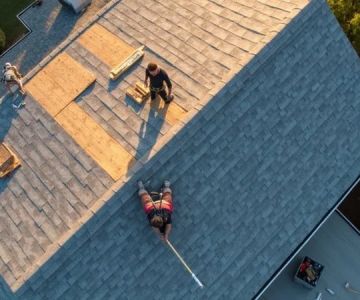
Stay on the ground unless a qualified person has established safe access. Roofing surfaces, edges, openings, weather, and weakened decking can present serious fall hazards.
Compare the work scope line by line
Create one row for each item and mark whether it is included, excluded, an allowance, or priced per unit:
- number of existing roof layers to remove and where debris will go;
- deck inspection and the price basis for replacing damaged sheathing;
- ice barrier or other membrane locations where relevant;
- underlayment type and installation area;
- drip edge, valleys, wall flashing, step flashing, and chimney flashing;
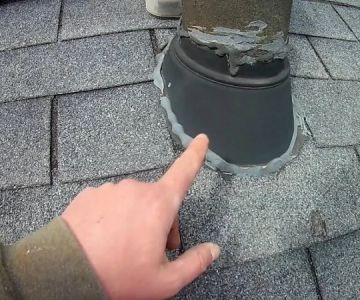
- pipe boots, roof vents, skylights, and other penetrations;
- intake and exhaust ventilation work, including what calculation supports a change;
- starter, field material, ridge or hip caps, fasteners, and sealants;
- gutters, solar panels, antennas, or HVAC-related items that require coordination;
- permits, inspections, delivery, access, landscaping protection, magnetic nail pickup, and final cleanup.
A low proposal may simply omit work included elsewhere. A high proposal may specify a broader repair, extra access equipment, premium material, or a larger contingency. Ask for the reason in writing.
Compare material specifications
Brand alone is not enough. Record the product line, material type, color or profile when relevant, underlayment, accessory compatibility, fastening method, and stated manufacturer installation requirements. Ask whether all components form one intended roof system or are mixed products.
Distinguish three different promises:
- manufacturer material warranty: generally concerns covered product defects under its written terms;
- contractor workmanship warranty: concerns covered installation issues for the stated period and conditions;
- marketing description: phrases such as “lifetime” may have definitions, prorating, transfer, registration, and exclusion terms.
Read the actual warranty documents. Do not assume the same label means the same coverage, labor reimbursement, wind terms, or transfer rules.
Compare price, allowances, and payment terms
For each estimate, record:
- base price and applicable taxes;
- permit, disposal, delivery, and equipment charges;
- decking and other concealed-repair unit prices;
- allowances and what happens if actual cost is higher or lower;
- deposit, progress payments, and final-payment trigger;
- financing provider, interest, fees, security interest, and total repayment if financing is offered;
- expiration date and circumstances that permit a price adjustment;
- change-order approval process.
FTC consumer guidance warns against automatically taking the lowest bid and recommends asking about major differences. It also advises against paying the full project amount upfront. State rules may limit deposits or impose specific contract terms, so verify requirements with the relevant state or local authority.
Verify the contractor and safety plan
- Confirm the legal business name, physical contact information, and who will supervise the job.
- Check required state or local licensing with the issuing authority, not only a badge on a website.
- Request current insurance information and verify it directly when appropriate.
- Ask who performs the work—employees or subcontractors—and who is responsible for permits, inspections, and warranty service.
- Ask how occupants, landscaping, entrances, vehicles, pets, debris, and weather interruptions will be managed.
- Ask how the employer plans for roof access and fall hazards; homeowners should not direct workers’ safety methods or enter controlled work areas.
- Review references or completed projects relevant to the same roof material and scope.
High-pressure demands, unexplained cash or wire requests, large upfront payment demands, blank contract spaces, and refusal to document promises are reasons to pause.
A practical decision method
- Normalize all estimates into the same comparison table.
- Highlight omissions, exclusions, allowances, and different material grades.
- Send each contractor a short list of factual clarification questions.
- Update the table using written answers, not memory.
- Remove proposals that fail required verification or leave critical scope unresolved.
- Compare remaining options on scope confidence, communication, schedule, warranty terms, safety planning, and total financial commitment.
- Before signing, read the complete contract and ensure oral promises are written into it.
This method is best when proposals are detailed enough to normalize. It is not ideal to force an emergency tarp, a small repair, and a full replacement into one price ranking; those solve different needs.
Limitations and important notes
Roof systems, climate exposures, building codes, permit rules, contractor licensing, lien notices, cancellation rights, insurance processes, and contract requirements vary by state and locality. Verify current requirements with the relevant government authority and obtain qualified legal, insurance, tax, or engineering advice when the decision calls for it.
Visible conditions do not reveal every deck, framing, moisture, or code issue. The contract should state how concealed conditions are documented, priced, and approved. Do not authorize vague open-ended work without understanding the process.
Frequently asked questions
How many roofing estimates should I get?
FTC consumer materials recommend multiple written estimates and separately advise getting three for home-repair scam prevention. Availability and emergencies vary, but one quote provides little basis for comparison.
Why are two roofing quotes far apart?
Possible causes include different repair strategies, tear-off assumptions, material systems, flashing scope, deck allowances, access, ventilation, permits, cleanup, labor, insurance, or warranties. Ask both contractors to explain the differences in writing.
Should decking replacement be included?
Some damaged decking may remain concealed until tear-off. A useful proposal states how inspection occurs and gives a unit price or other clear approval method for additional replacement.
Is the lowest roofing estimate a bad choice?
Not necessarily. It becomes a weak choice when the low total depends on omitted scope, vague materials, unverified qualifications, risky payment terms, or unresolved questions. Compare equivalent scope first.
Can I inspect the roof with the contractor?
Do not climb merely to compare bids. Ask for ground-level explanations, safely captured photos, and documented findings. Roof access should be handled by qualified people using appropriate safety procedures.
Sources and evidence notes
The US Federal Trade Commission’s home-improvement guidance recommends multiple written estimates and says they should describe the work, materials, completion date, and price. It advises consumers not to automatically choose the lowest bidder, to investigate major differences, to read contracts carefully, and not to pay the full amount upfront.
US Occupational Safety and Health Administration roofing guidance explains that reroofing includes serious fall hazards, that employers must assess hazards and structural integrity, and that fall-protection responsibilities belong to the employer. These sources support the consumer questions in this checklist; they do not replace site-specific compliance decisions.
Next steps
Build a one-page comparison with rows for removal, deck repair, water-shedding layers, flashing, ventilation, materials, accessories, permits, protection, cleanup, price adjustments, payments, schedule, and warranties. Return every blank or mismatch to the contractor as a written question.
Choose only after the proposals describe the same outcome clearly enough to compare. The most useful estimate is not simply the cheapest document; it is the one that lets you understand what will be done, what could change, who is responsible, and how the completed work will be verified.


 Prodigy Contracting Inc4.0 (38 reviews)
 Smart Energy Contracting5.0 (3 reviews)
 Chico construction llc0.0 (0 reviews)
 Madecol roofing and tree cutting service llc0.0 (0 reviews)
 APlus Roofing and Restoration5.0 (39 reviews)
 Surf & Turf Roofing, Solar and Windows4.0 (256 reviews)
 How to Install a Roof Cricket Behind a Skylight: Step-by-Step Guide
 How to Install Roof Snow Guards on a Metal Roof: A Complete Guide
 How to Get Your Roof Ready for a Home Appraisal to Boost Value
 How to Identify and Repair Roof Damage from Poor Ventilation
 The Pros and Cons of a Black Roof vs. a White Roof
 How to Choose a Roof Color for a Commercial Building for Brand Identity