
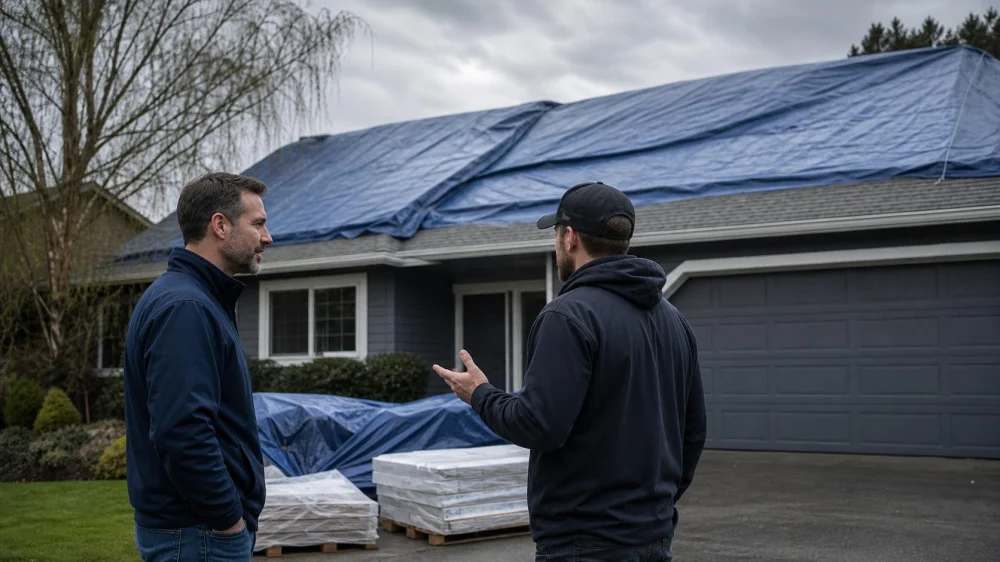
Roofing Weather Delay: Confirm Dry-In, Materials, and the Restart Plan
Quick answer: When weather pauses roofing work, ask the project lead to confirm in writing which roof areas are permanently finished, temporarily dried-in, or still vulnerable. Verify how openings and materials are protected, who monitors the site, what to report indoors, and what conditions must be met before the crew returns. Do not climb onto a wet or covered roof to inspect it yourself.
1. Ask Which Sections Are Finished, Dried-In, or Open
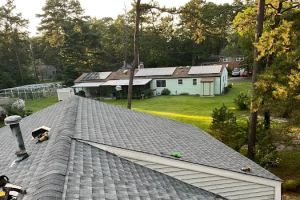
Request a simple marked roof plan or photos showing the exact status at shutdown. “Covered” can mean different things. Identify valleys, edges, transitions, low-slope areas, additions, and tie-ins that remain temporary.
2. Ask What the Temporary Water-Shedding System Is
Confirm the material, attachment method, laps, terminations, expected exposure, and manufacturer limits. Temporary protection should be installed by the contractor, not improvised by the homeowner. Wind can change a secure-looking condition.

3. Verify Skylights, Vents, Chimneys, and Wall Intersections
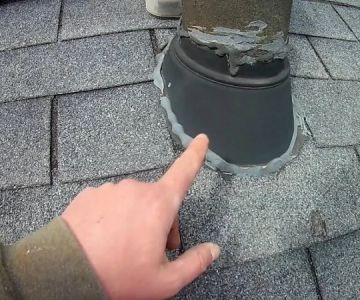
Ask how every opening and penetration is sealed during the pause. Interior ceilings below these areas deserve special observation. Do not seal exterior components from inside without contractor guidance; trapped water can move elsewhere.
4. Keep Shingles, Underlayment, and Accessories Dry and Stable
Materials should be stored according to manufacturer instructions, protected from water, wind, heat, impact, and theft. Ask who checks covers and whether damaged or wet packages will be separated before use.
5. Secure Tarps, Debris, Ladders, and Access Routes
The crew should remove or secure loose packaging, tools, ladders, and dumpsters. Maintain safe entrances and emergency exits. Keep children and pets away, especially after wind shifts barriers or debris.
6. Check the Attic and Ceilings From Safe Locations
Look for new stains, drips, damp insulation, odor, or ceiling changes without touching wet electrical fixtures or walking on attic insulation. Photograph from a stable floor. Report changes immediately and move belongings only when safe.
7. Save a 24-Hour Reporting Path
Know whom to call after hours, what information to send, and how quickly temporary response is expected. The main office, project manager, emergency tarp crew, and insurer may have different roles.
8. Treat the Restart Date as Conditional
A forecast is not a safe-work decision. Ask what wind, rain, temperature, moisture, and surface conditions must improve, and whether the crew or inspection schedule changes. Get revised milestones without pressuring unsafe work.
9. Have the Contractor Recheck Temporary Work Before Covering It
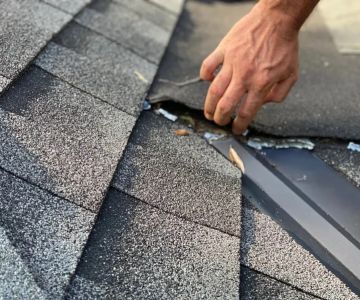
Protection may have shifted, collected water, or suffered wind damage. Ask for inspection of decking, underlayment, fasteners, openings, and stored materials before permanent roofing continues. Wet or damaged components should be addressed under the written scope.
10. Put Added Work, Time, and Responsibility in Writing
Save weather notices, photos, calls, revised schedule, protection work, damage reports, and change orders. Distinguish unavoidable weather delay from added repair scope. Review payment milestones and warranty effects using the contract rather than verbal assumptions.




 Power Roofing Queens Village5.0 (9 reviews)
 B&B ROOFING & GUTTERS.5.0 (218 reviews)
 BP Builders | Roofer, Roof Replacement, Roofing Company & General Contractor4.0 (215 reviews)
 United roofing and concrete1.0 (7 reviews)
 Mike Gorman Roofing Inc.4.0 (14 reviews)
 Bonner Master Roofing5.0 (123 reviews)
 Roof Wind Uplift Ratings Explained for Hurricane Zone Safety
 How to Choose a Roofing Contractor That Uses Drones for Inspection and Estimates
 How to Install Roof Heat Cable on a Metal Roof to Prevent Ice
 What is a Roof Deck and How to Repair or Reinforce It
 How to Install Roof Flashing on a Roof with Unconventional Shapes and Angles
 How to Choose a Roofing Contractor That Provides References from Past Clients