
- roof-flashing-basics - What roof flashing actually does and why it matters
- why-old-flashing-fails - Hidden deterioration even when it looks fine
- replacement-requirements - Why roof replacement usually includes new flashing
- real-case-example - A homeowner story showing hidden leak problems
- installation-details - How professionals install new flashing correctly
- cost-and-value - Why skipping flashing replacement costs more later
- professional-advice - What roofers recommend during full replacement
Why New Flashing Is Almost Always Required During a Roof Replacement (Even If Old One Looks Fine)
When homeowners plan a full roof replacement, one of the most common surprises comes from the roofing contractor’s recommendation: replace the flashing too. At first glance, this can feel unnecessary. If the metal strips around chimneys, vents, and valleys still look solid, why touch them? The answer is simple but often overlooked—roof flashing is one of the most failure-prone components in the entire roofing system, even when it appears perfectly intact.
Flashing is not just a finishing detail. It is the hidden waterproofing system that protects vulnerable transitions on your roof. And once a roof is being replaced, reusing old flashing is often like installing new tires on a car but keeping worn-out brakes. It may look fine, but it does not guarantee performance.
Understanding Roof Flashing and Its Real Job
How flashing protects the most vulnerable areas of a roof
Roof flashing is typically made from aluminum, galvanized steel, or sometimes copper. It is installed around chimneys, skylights, vents, valleys, and wall intersections. Its job is to redirect water away from seams where shingles alone cannot provide protection.
Without properly installed flashing, even a perfectly shingled roof will eventually leak. Water is relentless—it always finds the weakest point, and flashing is the first line of defense against that intrusion.
Why flashing works harder than shingles
Unlike shingles that cover broad surfaces, flashing handles concentrated water flow. Rain, snow melt, and wind-driven moisture constantly hit these areas. That means flashing undergoes more thermal expansion, contraction, and corrosion than almost any other roof component.
Why Old Flashing Looks Fine but Isn’t
Hidden corrosion beneath the surface
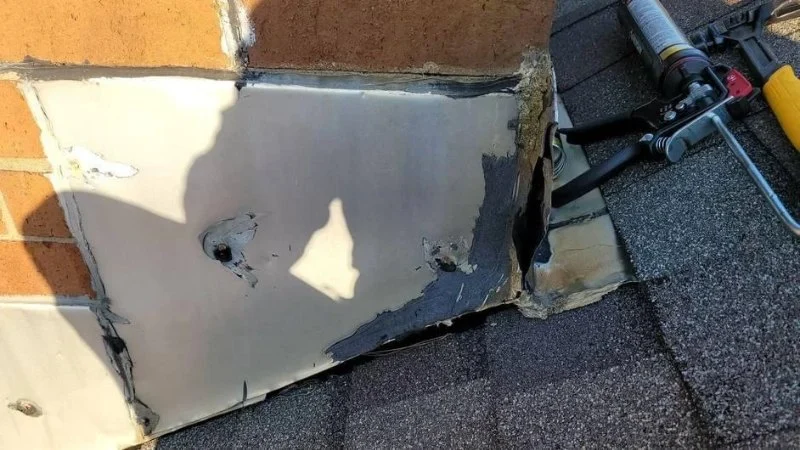
One of the biggest misconceptions in roofing is assuming “no visible damage” means “no problem.” In reality, flashing often corrodes from the underside where moisture accumulates. From the outside, it may still look clean and solid.
Microscopic cracks, nail loosening, and sealant degradation are common. These issues are invisible until water starts entering the home—often years after the initial problem began.
Sealant failure over time
Many older roofs rely heavily on caulking or roofing cement around flashing edges. While these materials are useful during installation, they are not permanent. UV exposure and temperature swings cause them to dry out, shrink, and detach.
By the time a roof replacement is needed, the sealant is often no longer doing its job—even if it still appears intact at a glance.
Why New Flashing Is Standard in Roof Replacement Projects
Compatibility with new roofing materials
Modern roofing systems are designed as integrated assemblies. New shingles, underlayment, and ventilation systems work together with properly sized flashing components. Reusing old flashing can create mismatches in thickness, alignment, or water flow design.
Preventing future leaks before they start
Roof replacement is the perfect opportunity to reset the entire waterproofing system. Reusing old flashing introduces uncertainty. Even if it functions today, it may fail within a few years, leading to premature leaks and interior damage.
Labor efficiency during installation
When contractors replace flashing during roof replacement, it allows them to properly integrate it under shingles and underlayment layers. Reusing old flashing often requires cutting corners or forcing fitment, which increases risk.
A Real-World Example: The Hidden Leak That Cost Thousands
A homeowner in a coastal neighborhood recently shared a common story. They invested in a full roof replacement but insisted on keeping the existing flashing because it “looked fine.” The contractor warned them, but the decision was made to reuse it.
For the first year, everything seemed perfect. Then a heavy storm season arrived. Small leaks began forming around the chimney. At first, it was just a stain on the ceiling. Within months, mold developed inside the attic insulation, leading to structural repair costs far beyond what new flashing would have cost.
When the roof was inspected again, the issue wasn’t the shingles—it was the old flashing that had separated slightly from the chimney base. The seal had failed silently over time.
How Professionals Properly Install New Flashing
Step-by-step integration into a new roofing system
During a full roof replacement, roofers typically remove shingles down to the decking. This gives full access to critical junctions. New flashing is then installed in layers:
First, base flashing is secured beneath shingles. Next, step flashing is installed along vertical walls. Finally, counter flashing is integrated into masonry or siding. This layered system ensures water flows downward and away from vulnerable joints.
Why professional installation matters more than materials
Even high-quality flashing materials can fail if installed incorrectly. Proper overlap, nailing technique, and sealing strategy are essential. A small installation mistake can undo the entire waterproofing system.
Cost vs. Value: Why Reusing Flashing Often Costs More
At first, skipping flashing replacement may seem like a way to save money. In reality, it often leads to higher long-term costs. Water damage repairs, mold remediation, and interior restoration are far more expensive than replacing flashing during the initial roof project.
Think of flashing replacement as insurance built directly into your roof system. It is a small investment that protects a much larger one.
Professional Insight From Roofing Experts
Most experienced contractors strongly recommend full flashing replacement during roof installation. Companies specializing in complete roofing systems, such as BeachCo Roofing Hub, emphasize that roof performance depends on every component working together—not just shingles.
Roofing professionals often say: “A new roof with old flashing is not a new roof.” That perspective comes from years of seeing preventable leaks caused by reused materials.
When Flashing Replacement Is Especially Critical
Older homes with layered roofing history
Homes that have undergone multiple roof repairs or partial replacements often have mixed flashing conditions. Some sections may be decades old, increasing the risk of hidden failure points.
Areas exposed to extreme weather
Regions with heavy rainfall, snow, or coastal humidity accelerate flashing wear. In these environments, reusing old flashing is especially risky due to constant moisture exposure and thermal cycling.
Chimney-heavy or complex roof designs
The more intersections a roof has, the more flashing it requires. Complex roofs benefit most from fresh flashing installation because they contain multiple vulnerable entry points for water.
Final Thoughts for Homeowners Planning Roof Replacement
When evaluating a roof replacement project, it is important to see flashing not as an optional add-on but as a core structural defense system. Even when old flashing looks fine, its internal condition may tell a very different story.
Choosing new flashing is not about upselling—it is about ensuring the roof performs as a unified system for decades. For homeowners planning a replacement, taking this step can mean the difference between a worry-free roof and unexpected repair bills.


 Elite Roofing Inc1.0 (1 reviews)
 Rhino Exterior Solutions4.0 (82 reviews)
 C&A Renovations Contractors LLC4.0 (49 reviews)
 Al Thomsen Roofing5.0 (3 reviews)
 Jersey Roofing Solutions5.0 (37 reviews)
 Hadden Home Improvement5.0 (3 reviews)
 How to Identify and Repair Roof Damage from Air Pollution
 Battery Storage Integration with Roof Solar Systems Explained
 What is a Roofing Material Storage Plan On-Site? Protecting Your Property
 How to Install Roof Snow Guards on a Metal Roof: A Complete Guide
 The Pros and Cons of a Liquid-Applied Reinforced Roof Membrane System
 How to Install Roof Snow Guards on a Metal Roof