
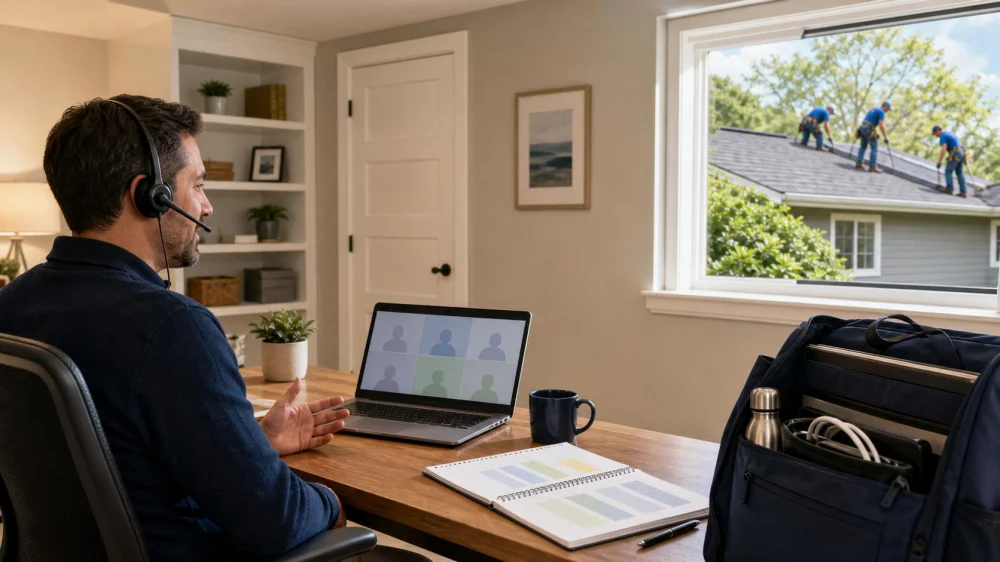
How to Work From Home During a Roof Repair Project
On this page
- Quick answer
- Get a realistic work schedule
- Choose the safest workable location
- Plan calls, power, and connectivity
- Separate work and construction access
- Use a daily coordination routine
- Work-from-home roofing checklist
- Limitations and safety notes
- Frequently asked questions
- Sources and evidence notes
- Block the noisiest work window
Quick answer
Ask the roofing contractor for each day's arrival time, loudest work phase, power or attic-access needs, delivery plan, and expected cleanup. Move important calls to the quietest window or an off-site workspace, choose a room away from active roof sections, protect computers from dust and vibration, and keep workers' paths, driveways, exits, and electrical access clear. Use one contact person so work questions do not repeatedly interrupt meetings.
Roof repair noise travels through the structure. Headphones can reduce distraction but cannot make every meeting practical.

Roofing & Restoration Services of America
Windsor LocksCapitol Planning RegionConnecticut
35 King Spring Rd, Windsor Locks, CT 06096, USA
Get a realistic work schedule
Request a daily outline rather than only a project start and finish date. Ask when tear-off, decking work, material loading, fastening, flashing, cleanup, and inspection are expected. Weather and hidden damage can change the plan.
Confirm how schedule changes will be communicated and who can answer urgent property questions. Share your essential meeting windows, but understand the crew may not be able to pause weather-sensitive or safety-critical work.

Booth Brothers Construction
PasadenaAnne Arundel CountyMaryland
46 Wishing Rock Rd Ste. B, Pasadena, MD 21122, USA
Choose the safest workable location
Select an interior room or lower-level space away from the current work zone, attic hatch, exterior doors, and ceiling areas being repaired. Remove fragile wall or shelf items that vibration could dislodge. Close equipment covers and keep drinks away from electronics.
Do not work below a ceiling that is sagging, shedding material, actively leaking, or identified as restricted. Follow contractor instructions about rooms that must be vacant during decking or structural work.
Plan calls, power, and connectivity
Move high-stakes presentations, interviews, recordings, and confidential calls to a coworking space, library room, office, or another suitable location. Test mobile hotspot, headset, charging, and document access before work begins.
Ask whether the crew needs interior outlets, breaker access, or temporary power interruption. Save work frequently and use approved surge protection or backup power appropriate to the equipment. Do not run cords through crew travel paths.
Separate work and construction access
Choose one household contact for the project and one communication channel. Tell the project lead which doors, bathrooms, outlets, and attic entrances are authorized. Secure private files, medicines, valuables, and confidential screens.
Keep vehicles out of delivery and debris zones. Do not step outside under active work, approach ladders, move barriers, or enter a dumpster area to take a call. Arrange children, pets, and visitors separately from construction access.
Use a daily coordination routine
Before work, confirm the crew's focus, restricted rooms, access needs, deliveries, and approximate stopping time. Put the plan on your calendar with a buffer. Tell coworkers that construction may create intermittent noise without sharing unnecessary property details.
At day's end, ask whether the building is secure, equipment remains, any interior change is needed overnight, and what tomorrow's noisiest phase will be. Update meetings and backup location accordingly.
Work-from-home roofing checklist
- Obtain a daily phase and noise outline.
- Identify an off-site meeting backup.
- Move work away from active roof areas.
- Secure electronics, shelves, and private materials.
- Test headset, hotspot, charging, and file access.
- Keep exits, outlets, driveway, and crew routes clear.
- Use one household project contact.
- Review tomorrow's plan at day end.
Limitations and safety notes
- This guide does not decide whether the home is safe to occupy during construction.
- Follow the contractor, building authority, and emergency instructions about restricted areas or evacuation.
- Headphones must not prevent hearing alarms or urgent warnings.
- Dust, fumes, vibration, heat, weather, utility shutdowns, and medical or sensory needs may make off-site work necessary.
- Do not climb, inspect, or photograph from the roof.
Frequently asked questions
Which phase is usually loudest?
Tear-off, decking, loading, and fastening can be very loud, but the contractor should describe the actual scope and sequence.
Can the crew pause during my meeting?
Ask early, but weather, safety, workflow, and contract timing may prevent a pause. Keep an off-site plan.
Will noise-canceling headphones be enough?
They may help with steady sound but not impact vibration. Keep alarm and emergency awareness.
Should computers be covered?
When powered off and the maker permits, dust protection may help. Maintain ventilation during use and keep equipment away from work paths.
Can I stay home for the whole project?
It depends on scope, occupancy safety, utilities, noise tolerance, access, and contractor direction.
Sources and evidence notes
This plan applies construction coordination and business-continuity principles: understand daily phases, separate people from work zones, preserve communication, protect equipment, plan alternate capacity, and review changes. The contractor's safety plan and site conditions determine whether home occupancy is appropriate.
Block the noisiest work window
Ask the project lead which four-hour period is likely to be noisiest on the first day. Move critical meetings outside that block or reserve an off-site location, then test connectivity and gather work materials before the crew arrives.

 Semper Roofing Ellicott City4.0 (75 reviews)
 SKYLINE ROOFING & SIDING SERVICES INC5.0 (16 reviews)
 Novak Home Improvements Co.4.0 (53 reviews)
 Emerald Roofing and Siding LLC5.0 (243 reviews)
 The USA Roofer5.0 (31 reviews)
 L&M Company4.0 (6 reviews)
 The Average Cost of a Roof Coating Application
 Moss and Algae on Roof: Safe Removal Techniques and Prevention Tips
 Battery Storage Integration with Roof Solar Systems Explained
 How to Install Roof Ice and Water Shield on Complex Roof Details
 How to Choose a Roof Ventilator: Static, Powered, Turbine, or Ridge?
 Cedar Shake Roof Maintenance: Cleaning, Treating, and Repairing Wood Shakes