
Roof Repair With Gutter Guards: Plan Removal, Protection, and Reinstall
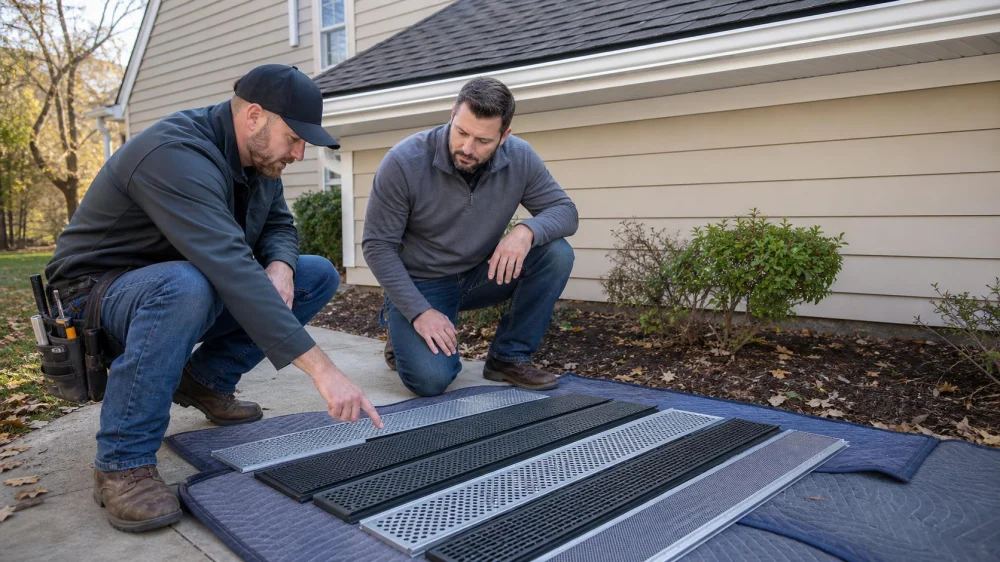
Gutter guards sit at the roof edge where shingles, drip edge, fascia, underlayment, and drainage meet. A roof repair may require some guards to be removed, protected, modified, or replaced. If that coordination is left until work begins, sections can bend, warranties can conflict, and the repair can change how water reaches the gutter.
Identify the Guard System
Record the brand or product description, material, profile, fasteners, attachment location, installation date, and contractor when known. Screens, micro-mesh, solid covers, foam inserts, and brush systems behave differently. Photograph each elevation from the ground. Do not lift a guard to identify it; roof edges and ladders create serious fall risk.

Map the Repair Scope
Ask the roofer to show which roof edge, valley, flashing, fascia, soffit, or gutter areas the repair affects. A small shingle repair may still require access across a guard section. Mark exact elevations on a sketch and estimate linear length. Include downspouts and corners where debris or fasteners could travel during work.
Check Warranty Terms
Review roof, gutter, guard, and workmanship warranties before removal. Some products require an authorized installer or specific attachment method. Ask each company in writing how the repair affects coverage. Do not accept a vague promise that everything will remain warranted without identifying which party covers removal damage, leaks, drainage, and future service.
Assign Responsibility
State who removes guards, stores them, supplies replacement pieces, reinstalls them, cleans gutters, and verifies drainage. Coordinate a separate guard installer if the roofer excludes that work. Put schedule and price in the contract or change order. Avoid a gap where the roofer finishes but no contractor agrees to return the roof edge to service.
Document Removal
Before work, photograph joints, corners, end caps, fastener locations, transitions, and any bent or missing sections. Ask the contractor to label reusable pieces by elevation without blocking required product markings. Removed fasteners should not be reused unless the system instructions allow it. Record concealed corrosion, damaged fascia, or blocked gutter discovered during removal.
Protect Stored Sections
Store reusable guards flat or in the orientation the manufacturer recommends, away from vehicles, foot traffic, landscaping damage, and sharp debris. Do not stack heavy roofing materials on mesh or covers. Secure lightweight parts from wind without bending them. Keep fasteners and accessories organized by location and protect finished surfaces from mortar, sealant, and shingle granules.
Inspect the Roof Edge
With guards removed, the contractor can inspect drip edge, starter shingles, underlayment, fascia, gutter slope, hangers, seams, and evidence of overflow. Ask for photos because these details may become hidden again. Approve any added repair through a written change order. Guard removal is not permission to replace the entire gutter without diagnosis and price.
Reinstall to Approved Details
Reinstallation should preserve shingle and membrane requirements, drainage paths, thermal movement, gutter slope, and access for future cleaning. Do not push guards beneath shingles when the roof or guard manufacturer prohibits it. Replace distorted parts rather than forcing them. Sealants and fasteners should be compatible with adjacent metals and finishes.
Verify Drainage Safely
After reinstall, inspect from the ground for level transitions, lifted edges, gaps, loose pieces, or guards blocking downspout entries. A controlled water test may be appropriate when performed by the contractor under suitable conditions. Do not climb or spray water under the roof edge yourself. Monitor during ordinary rain for overflow, leaks, or changed flow.
Keep Final Records
Save before, removal, hidden-stage, and finished photos along with product details, repair scope, replacement quantities, warranties, test results, and invoices. Note any guard section intentionally left off and why. Give the records to future roof, gutter, fascia, and cleaning contractors so they understand how the edge assembly was rebuilt.
Include cleaning access in the finished plan. Ask how leaves, seeds, roof granules, and ice will be inspected or removed without damaging the repaired edge. Confirm whether the guard lifts, requires special tools, or must be serviced by an authorized installer. Do not interpret “maintenance-free” as permission to ignore overflow. Ground-level observations during rain and scheduled professional checks remain useful even when the top of the gutter is covered.
Coordinate seasonal timing. Frozen guards, active nests, heavy pollen, falling leaves, and storm forecasts can affect safe removal and testing. If work pauses, the contractor should secure open gutter sections and prevent loose parts from becoming windborne. The homeowner should keep clear and document conditions from the ground. Rescheduling is preferable to forcing brittle or icy components into a repair sequence.
Gutter guards should be part of the roof-repair scope, not an obstacle discovered on day one. Identify the system, protect warranties, assign removal and reinstall, inspect hidden roof-edge details, test drainage safely, and preserve records. Coordination protects both the repair and the water path.


 Marshall Roofing, Siding & Windows Inc4.0 (51 reviews)
 A. Parker Contracting5.0 (31 reviews)
 Martin Brothers Roof Repair4.0 (38 reviews)
 IRVING CONSULTING GROUP INC.5.0 (1 reviews)
 All Covered Roofing & Exteriors5.0 (71 reviews)
 Advantage Home Exteriors5.0 (28 reviews)
 Lifetime Shingle Warranty: Is It Really for Life or Just a Marketing Gimmick?
 What Is a Roof Tune-Up? Services Included in a Semi-Annual Roof Maintenance Plan
 How to Install Roof Ice and Water Shield on Complex Roof Details
 How to Install a Roof Cricket Behind a Rooftop Stairwell Enclosure
 Roof Snow Load Calculation: How to Know if Your Roof is at Risk
 Roof Repair Photo Log: Document the Project From the Ground