
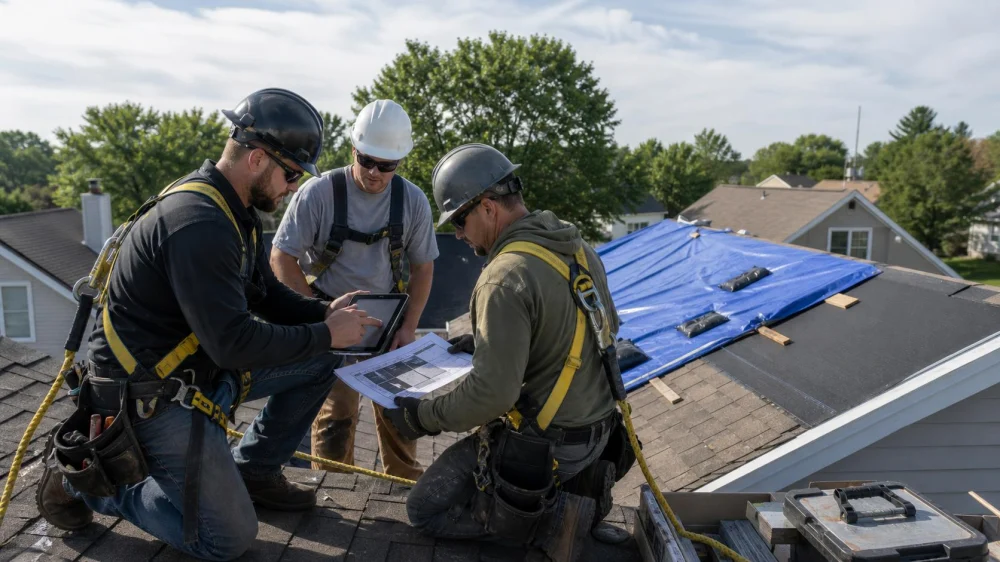
Roof Repair Weather Window: Plan Exposure, Covering, and Restart
On this page
Quick answer
Before a roof repair opens the assembly, confirm the hourly forecast, exposed area, crew cutoff time, dry-material storage, temporary covering method, overnight condition, and restart criteria. Weather forecasts are uncertain, so the contract or work plan should assign who monitors conditions and protects the building. Do not let urgency justify exposing more roof than the crew can make weather-tight.
Why it matters
A small repair can become major water damage when deck or underlayment is exposed longer than planned. Wind, heat, cold, dew, and humidity also affect worker safety, adhesives, sealants, membranes, and warranties.
This United States guide is general. Roof system, product instructions, climate, crew capacity, emergency work, permits, and occupancy differ. Contractor safety and manufacturer limits control.

Practical checklist
- Review hourly precipitation, wind, temperature, dew, and severe-weather alerts.
- Define the maximum area that may be opened at one time.
- Confirm material temperature and dry-storage requirements.
- Set a stop time that leaves enough daylight for secure covering.
- Specify temporary cover, edge attachment, drainage, and inspection.
- Protect attic, interiors, utilities, and occupied areas below.
- Agree on restart checks for deck dryness, damage, and product conditions.
Step-by-step plan
- Ask the contractor which weather sources and thresholds govern the decision.
- Match daily scope to crew, access, roof complexity, and realistic close-in time.
- Stage compatible materials and covering before removing roofing.
- Inspect decking and document hidden damage without leaving the opening unprotected during decisions.
- Close water-control layers progressively rather than waiting until the end of the day.
- Inspect temporary protection from safe positions after weather and report movement or interior water.
- Before restart, verify dry, sound substrate and product temperature according to instructions.
Keep forecast snapshots, start and stop decisions, exposed area, product instructions, deck photos, temporary-cover method, inspection times, weather events, moisture findings, and change orders.
Limits and warning signs
A low rain percentage is not a guarantee, and a tarp cannot replace a completed roof. Dry-looking wood may retain moisture, while cold or hot materials may fall outside installation limits.
Stop work for lightning, unsafe wind, precipitation, extreme temperature, unstable covering, wet electrical areas, or structural concerns. Use emergency mitigation for active interior water or falling material.
Frequently asked questions
Who decides whether work starts?
The qualified contractor must apply safety, product, and site conditions; responsibilities should be clear in writing.
Can a tarp stay overnight?
Only as a planned temporary system with secure attachment, drainage, inspection, and prompt permanent close-in.
What if hidden deck damage delays work?
Use a pre-agreed change-order and temporary-protection process.
How dry must the deck be?
Follow roof-system and manufacturer requirements; visual appearance alone may not be enough.
Sources and evidence
The guide applies roofing quality and safety principles: match exposure to crew capacity, follow weather and product limits, stage temporary protection first, close in progressively, document concealed conditions, and verify substrate before restart.
Conclusion and next steps
Before tear-off, ask for the maximum open area, weather thresholds, cutoff time, temporary-cover detail, and restart test. Proceed only when materials and crew can make the opening secure the same day.

 Strober-Wright Roofing Inc4.0 (9 reviews)
 John Roofing LLC1.0 (1 reviews)
 Clean Cut Construction5.0 (5 reviews)
 Weaver Roofing0.0 (0 reviews)
 Revival Home Improvements4.0 (21 reviews)
 Maspeth Contracting Corp. dba Maspeth Roofing & Siding4.0 (11 reviews)
 : How to Identify Roof Hail Damage: Size and Impact Markers - BeachCo Roofing Hub
 Final Roof Inspection Checklist Before Final Payment
 Are DIY Roof Repairs Actually Cheaper? Hidden Costs Explained
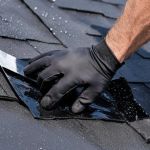 How to Repair a Roof Leak in a Building with a Fabric Membrane Roof
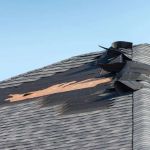 How to Prevent Roof Shingles from Blowing Off in High Winds
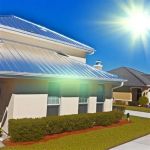 The Cost of a New Roof with an Energy Star Rated Reflective Coating