
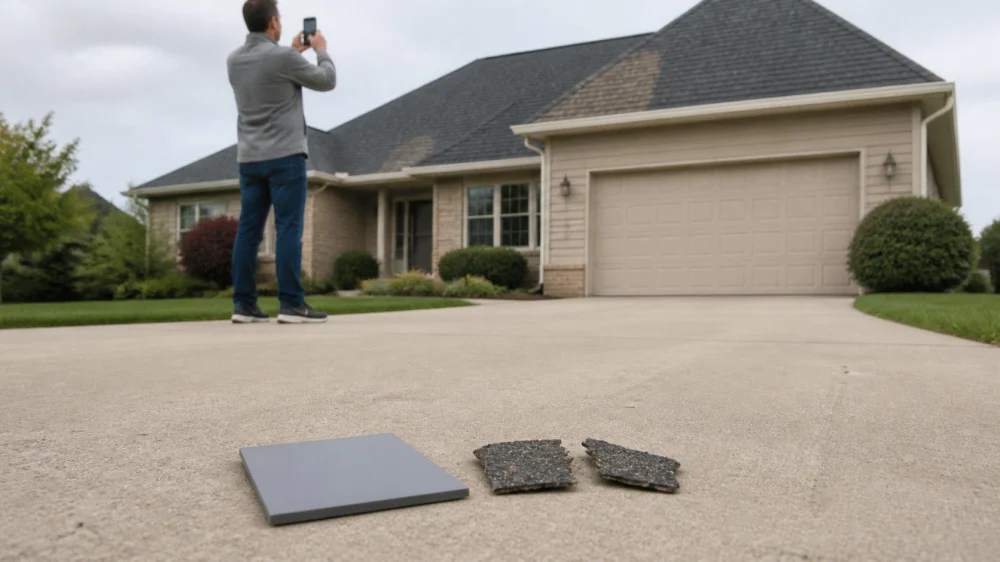
Roof Shingle Pieces on the Ground: Record Before Repair
On this page
Quick answer
If shingle pieces appear on the lawn or driveway after wind, keep people away from falling-debris zones, photograph the pieces where they landed, and use ground-level zoom to look for a color or pattern change on the roof. Do not climb, lift nearby shingles, nail material back, or assume the piece came from your home. Arrange a qualified roof inspection and watch safely for interior water signs.
Active leakage, a visibly open roof area, fallen lines, or unstable trees require urgent professional or emergency response.
Make the area safe
- Wait until wind, lightning, hail, and heavy rain have passed.
- Check for downed or low electrical lines before walking outside.
- Stay clear of leaning trees, hanging branches, gutters, and roof-edge debris.
- Move vehicles and outdoor seating only when the route is safe.
- Keep children and pets indoors or outside the fall zone.
- Wear sturdy footwear and gloves for accessible sharp debris.
Do not stand under the eaves to look upward. More material can release after the storm.
Brush House Roofing and Siding
41 William St Suite 101, Wayne, NJ 07470, USA
Document the pieces
- Photograph each piece in its original location.
- Include the house and wall elevation for context.
- Place a ruler nearby for scale without altering the piece.
- Record color, profile, granules, nail holes, torn edges, and attached underlayment if visible.
- Note storm time, wind direction, and nearby construction.
- After documentation, place accessible debris in a sturdy labeled container.
- Keep it for the contractor and insurer.
Do not wash, trim, glue, or discard the material. It may help identify product and failure location.
Check the roof from the ground
From across the street or yard, use binoculars or camera zoom to compare roof slopes, ridges, hips, valleys, and edges. Look for missing tabs, a rectangular color difference, lifted edges, exposed underlayment, loose flashing, and debris caught in gutters.
Check neighboring roofs and shared property boundaries. A lightweight shingle fragment can travel, so material on your lawn is not proof that your roof lost it.
Protect the interior
Check ceilings, attic access surroundings, upper walls, windows, and fixtures for stains, drips, or damp odor without entering unsafe attic areas. Move portable belongings from a drip when safe and place a stable container below it.
Stay away from sagging ceilings and water near electrical fixtures. Do not attach a tarp or patch from the roof. Temporary exterior protection should be installed by trained personnel with proper access and attachment methods.
Arrange inspection
Ask the contractor to photograph the full roof, identify the exact loss location, check adjacent shingles and fasteners, and inspect flashing, underlayment exposure, penetrations, and interior signs. Request a written distinction between isolated wind loss, broader damage, age-related failure, installation issues, and unrelated debris.
Verify contractor licensing where required, insurance, references, and the written scope. Avoid pressure to sign immediately after a storm.
Repair questions
- Can the product, size, exposure, color, and installation method be matched?
- How will surrounding shingles be lifted or fastened without damage?
- Is underlayment or decking affected?
- What manufacturer instructions and code apply?
- How will repair weather-tightness be verified?
- What photos and warranty documents will be provided?
- How will leftover debris and nails be collected?
Frequently asked questions
Can I glue a loose piece back?
No. A compatible repair requires inspection of the shingle, fasteners, and layers beneath.
Does one piece mean the roof must be replaced?
Not necessarily. Scope depends on actual roof condition, compatibility, and repairability.
Should I start an insurance claim immediately?
Review the policy and reporting requirements, document promptly, and use the insurer’s official channel.
Can a shingle come from another house?
Yes. Wind can move debris; identification and roof inspection matter.
What if no gap is visible from the ground?
Damage can be subtle or on a hidden slope. Arrange inspection if the material is likely roofing debris.
Sources and evidence notes
This guide applies post-storm scene safety, evidence preservation, ground-level roof observation, interior water protection, and documented contractor assessment. Repair and insurance conclusions depend on product, installation, weather, code, policy, and actual damage.
Use manufacturer instructions, local requirements, insurer procedures, and qualified roofing professionals.
Conclusion and next steps
Preserve the landing location and physical piece, scan the roof from a safe distance, and check the interior without entering hazard zones. Give the contractor your photographs, storm details, and sample, then request roof-location evidence and a written repair basis. Do not turn a useful clue into a risky rooftop search or improvised patch.



 Regensburg Roofing Company Inc.5.0 (1 reviews)
 Bluefield Builders Roofing4.0 (7 reviews)
 Warren Thompson0.0 (0 reviews)
 MasterCraft Chimney Sweep & Cleaning0.0 (0 reviews)
 Happy Days Roofing0.0 (0 reviews)
 Monarch roofing&construction5.0 (148 reviews)
 How to Repair a Roof Leak from a Rooftop Water Feature or Pond
 The Pros and Cons of DIY Roofing vs. Hiring a Professional
 How to Install a Roof Underlayment for a Cedar Shake Roof | Expert Roofing Tips
 How to Choose the Best Roofing Material for a Shady, Damp Environment
 Understanding the Cost of a New Roof with an Energy Star Rated Reflective Coating
 Roofing Change Order: Check Scope, Price, and Approval