
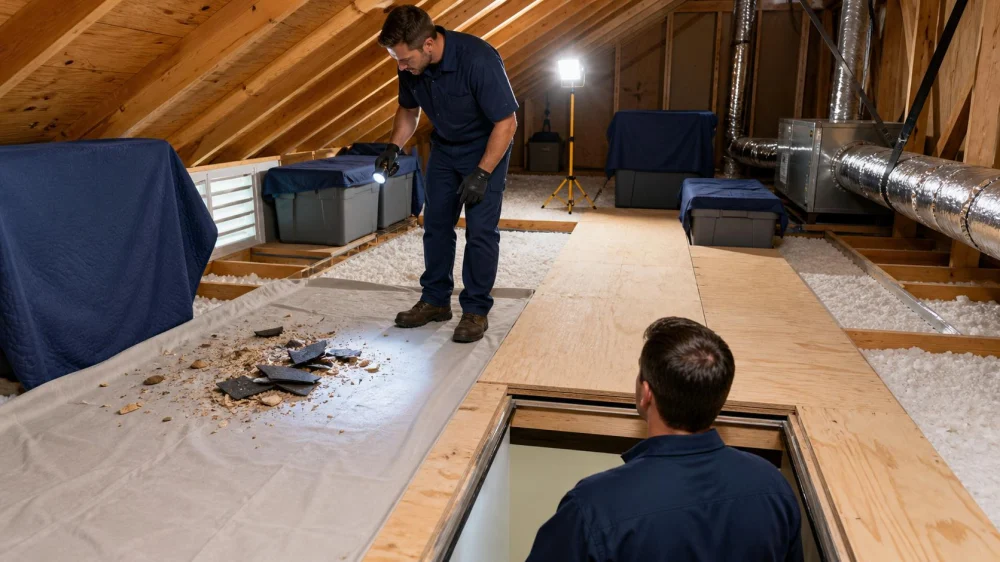
Roofing Debris in the Attic: Plan Containment and Cleanup
On this page
Quick answer
Roof repair and replacement can dislodge wood chips, old roofing fragments, dust, and fasteners into an attic. Before work, photograph accessible areas, cover stored belongings without blocking ventilation or equipment, and put interior cleanup in the contract. After work, inspect only from safe platforms, keep away from insulation-hidden nails and wiring, and require documented removal of project debris.
Attic cleanup is different from ground magnetic sweeping. It must protect insulation, air sealing, mechanical equipment, wiring, ventilation, and safe access.

James Roberts Roofing
WesthamptonHampshire CountyMassachusetts
30 Edwards Rd, Westhampton, MA 01027, USA
Before roof work
Ask whether deck replacement, tear-off, new penetrations, ridge work, or fastening is expected to drop material inside. Identify attic hatches, walking boards, trusses, insulation type, stored items, HVAC equipment, ducts, recessed lights, fans, alarms, and fragile finishes below.
Move valuables and fragile items out of the attic where safe. For belongings that remain, ask the contractor about breathable or temporary covers and who will remove them. Do not drape equipment, block soffit or ridge ventilation, compress insulation, or cover heat-producing devices. Photograph visible conditions and note pre-existing dust, pest material, staining, and loose debris.

Six Brothers Commercial Roofing Contractors
LyndhurstBergen CountyNew Jersey
518 Stuyvesant Ave, Lyndhurst, NJ 07071, USA
Inspect without disturbing hazards
- Wait until active roofing work, falling debris, and overhead fastening are finished.
- Use the fixed access and structural walk surface; never step between framing members or onto insulation.
- Bring bright lighting, keep hands free for access, and have another person know you are entering.
- Look for nails, splinters, shingle fragments, packaging, sawdust, damaged ducts, displaced insulation, and debris around equipment.
- Do not handle suspect asbestos-containing material, animal waste, mold, energized wiring, hot equipment, or sharp debris without appropriate expertise.
- Photograph issues from the safe route and leave the attic if heat, air quality, footing, or clearance is unsafe.
Ceiling damage, a foot through drywall, exposed wiring, damaged venting, or a heavy concentrated debris load needs prompt professional attention, not casual cleanup.
Define cleanup scope
The contract should state whether the roofer removes project-generated attic debris, protects equipment, replaces displaced insulation, and arranges a specialist when contamination or system damage is outside roofing scope. Define what “broom clean” means in an unfinished attic and which surfaces are excluded.
Removal methods should match the material and attic. Hand pickup, HEPA-filtered vacuuming, controlled drop cloths, or limited insulation work may be appropriate; blowing debris deeper into insulation is not verification. Fasteners can hide beneath loose-fill insulation, so require a method that does not create new ceiling, electrical, or exposure hazards.
Verify closeout
Compare the same before-and-after views from the safe access route. Confirm that covers, tools, packaging, temporary lights, and containers are removed; ventilation remains open; insulation is restored; ducts and equipment are intact; and no new water path or daylight appears where it should not.
Ask the contractor to photograph inaccessible areas they entered and identify anything left by agreement. Record damaged property and notify the contractor promptly under the contract process. A clean ground does not prove a clean attic, and a clean attic does not replace the roof’s exterior and permit inspections.
Attic checklist
- Project debris risk discussed before work
- Safe access, walking surface, equipment, and insulation mapped
- Belongings moved or protected without blocking systems
- Before photos saved
- Post-work entry delayed until overhead work ends
- Sharp, electrical, heat, air, and contamination hazards avoided
- Cleanup method and trade responsibility documented
- Ventilation, insulation, ducts, equipment, and covers verified
Limitations
Attics may contain extreme heat, confined access, unstable footing, exposed wiring, hazardous dust, pests, asbestos-containing materials, mold, and combustion venting. This article does not authorize entry or cleanup. Use qualified roofing, insulation, HVAC, electrical, remediation, or environmental professionals as conditions require.
FAQ
Is some debris normal?
Construction can dislodge material, but what remains should match the agreed cleanup scope and must not create hazards or damage systems.
Can I vacuum it myself?
Only if the attic and material are known to be safe and the method is appropriate. Sharp fasteners, dust, insulation, and wiring can make DIY cleanup unsafe.
Will a magnetic sweep find attic nails?
Magnets may collect some ferrous fasteners, but insulation depth, access, and nonmagnetic debris limit the method.
Should I cover the HVAC unit?
Do not improvise covers that block ventilation or equipment. Coordinate protection and removal with the contractor and HVAC guidance.
Who pays for cleanup?
The contract, cause, and local law govern. Define responsibility before work and document new debris promptly.
Evidence notes
Useful evidence includes dated pre-work photos, the roofing scope, attic protection plan, safe post-work photos, debris-removal records, and system checks by the appropriate trade. Visual cleanliness from the hatch does not prove that hidden insulation, wiring, or equipment is unaffected.
Conclusion
Attic debris is easiest to manage when it is part of the roofing plan. Record the starting condition, protect without blocking systems, avoid unsafe entry, assign cleanup methods, and verify the attic separately from the exterior roof.

 Strober-Wright Roofing Inc4.0 (9 reviews)
 John Roofing LLC1.0 (1 reviews)
 Clean Cut Construction5.0 (5 reviews)
 Weaver Roofing0.0 (0 reviews)
 Revival Home Improvements4.0 (21 reviews)
 Maspeth Contracting Corp. dba Maspeth Roofing & Siding4.0 (11 reviews)
 : How to Identify Roof Hail Damage: Size and Impact Markers - BeachCo Roofing Hub
 Final Roof Inspection Checklist Before Final Payment
 Are DIY Roof Repairs Actually Cheaper? Hidden Costs Explained
 How to Repair a Roof Leak in a Building with a Fabric Membrane Roof
 How to Prevent Roof Shingles from Blowing Off in High Winds
 The Cost of a New Roof with an Energy Star Rated Reflective Coating