
Roofing Material Delivery: Check Labels From the Ground
Table of contents
Quick answer
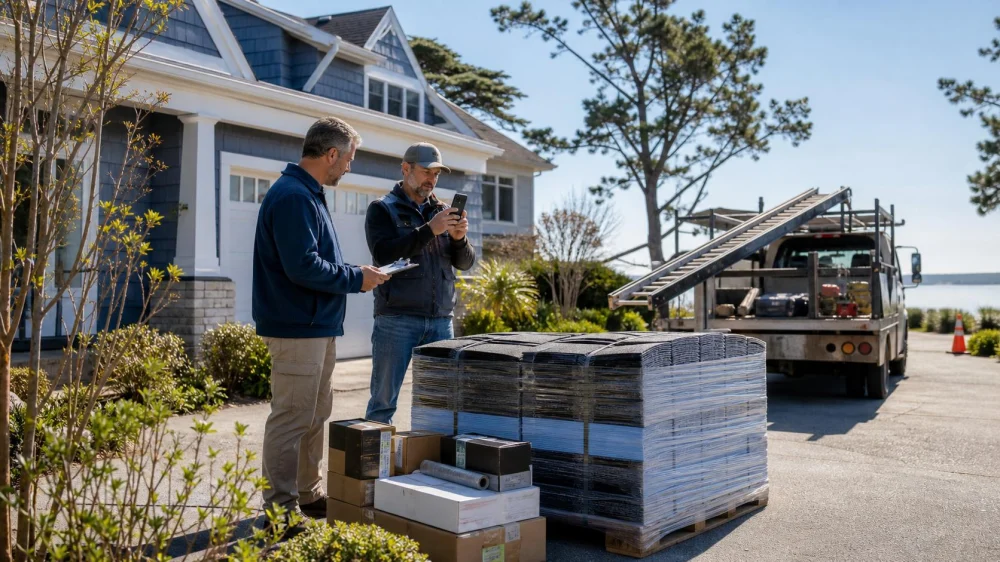
Before delivery, turn the signed scope into a short product list. From a safe ground-level position, ask the contractor to identify the shingles, underlayment, starter, ridge material, flashing, ventilation, and accessories. Photograph accessible labels showing product name, color, and lot or batch information. Note wet, torn, crushed, unlabeled, or mismatched packages and get written confirmation before those materials are installed.
Prepare the contract list before delivery
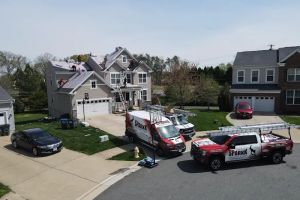
Use the final signed contract, approved change orders, color approval, and manufacturer system documents—not an early estimate. Create a one-page list with each promised product's manufacturer, line, color, grade, and key accessory. Mark allowances or “equivalent” items that still require a decision.
Include more than the visible field shingles. Depending on the project, the list may name underlayment, ice-barrier membrane, starter strips, ridge-cap material, flashing metal, pipe boots, fasteners, sealant, vents, and deck panels. Do not guess quantities from roof area alone; waste, cuts, slopes, valleys, and package coverage affect the contractor's calculation.
Stay outside the unloading and roof zones
Ask the project manager where the homeowner observation area begins. Keep children, pets, vehicles, and visitors away from the truck, conveyor, crane, pallet jack, falling-object area, and worker paths. Never walk under raised material or stand between a truck and a wall, garage, or pallet.
Do not climb a ladder or step onto the roof to count bundles. Material delivery onto a roof is construction work with fall and material-handling hazards. Let trained workers control lifting, roof loading, and placement while you document only what is safely visible from the ground.
Photograph accessible product labels
Ask before approaching stacked material. When the supervisor says the area is safe, take a clear photo of a representative label from each product group. Useful fields can include:
- manufacturer and exact product line;
- color or finish name;
- lot, batch, run, or production identifier;
- package coverage, dimensions, or piece count;
- applicable product or reference standard; and
- visible warranty or installation document reference.
Capture the pallet or stack in a wider photo, then the label close-up. Keep the originals with date and time metadata. A label photo supports comparison; it does not prove that every hidden package is identical or that installation will meet requirements.
Match the product, color, and system components
Compare each readable label with the contract list. A similar color name, package design, or brand family is not enough when the agreement specifies a particular line or performance classification. Ask the contractor to explain any substitute and document acceptance before opening packages.
Check lot information where the manufacturer calls for it. Owens Corning's published instructions for certain Duration shingle products caution against mixing material bearing different lot numbers. Other products can have different rules, so use the exact manufacturer's current instructions rather than applying one brand's rule to every roof.
View color as a complete system. Starter and ridge products may have different labels from field shingles even when they are intended to work together. Ask the contractor to identify each component instead of assuming every bundle should look the same.
Check visible condition and storage
From the safe boundary, look for torn wrapping, crushed corners, standing water, wet cardboard, opened pails, broken pallets, or labels too damaged to read. Photograph the condition and alert the project manager. Do not open, move, restack, or reject material directly with the driver unless the contractor has assigned you that authority.
Manufacturer guidance commonly requires roofing materials to remain dry and protected. Confirm who is responsible for tarps, pallets, ventilation, theft protection, and weather decisions if material will stay overnight. Keep packages away from sprinklers and routine vehicle paths, and do not drape a tarp in a way that workers have not approved.
Resolve a mismatch before installation
- Pause the discussion without entering the active work area.
- Photograph the label, package group, and visible condition.
- Quote the relevant contract or approved change-order line.
- Ask the project manager whether the item is a substitute, accessory, or delivery error.
- Request a written explanation and any price, warranty, or schedule effect.
- Record the agreed correction or approval before the disputed product is installed.
Do not direct individual crew members to change products; use the contractor's designated decision-maker. Once packaging is discarded and material is installed, identification can become harder.
Ground-level delivery checklist
- Final contract, change orders, and color approval are available.
- The contractor identifies a safe observation boundary.
- Children, pets, vehicles, and visitors remain clear.
- Representative labels are photographed without moving materials.
- Product line, color, and lot information match the approved scope.
- System accessories are identified rather than overlooked.
- Wet, damaged, crushed, opened, or unlabeled packages are documented.
- Storage and mismatch decisions are confirmed in writing.
Limits and safety cautions
This article offers general homeowner project-management information, not engineering, legal, warranty, or installation advice. Contracts, building codes, product instructions, roof designs, delivery methods, and site conditions differ. Only qualified workers should determine roof loading, installation sequence, and fall protection.
A ground review cannot verify concealed materials, deck condition, fastening, flashing details, ventilation calculations, or code compliance. Use the contract's inspection and documentation process, and hire an independent qualified inspector when the project risk or dispute warrants it.
Frequently asked questions
Should I count every shingle bundle?
Ask the contractor to reconcile quantities. You may record visible package groups, but do not enter unloading zones or climb to verify a count. Excess or staged deliveries can be normal.
Are different lot numbers always unacceptable?
Not for every product. Follow the exact manufacturer's current instructions and the contract. When a label difference appears, ask before installation and document the answer.
Can roofing materials stay in the driveway overnight?
That depends on weather, packaging, manufacturer storage requirements, security, local rules, and access needs. Confirm the contractor's protected-storage plan.
What if the label shows a different product than the contract?
Photograph it and contact the project manager. Request written clarification and do not approve a substitute casually; it may affect price, appearance, compatibility, or warranty terms.
Manufacturer and safety sources
- Owens Corning: Duration Series Shingle Installation Instructions
- GAF: Roofing Product Document Library
- OSHA: Construction Material Handling, Storage, Use, and Disposal
- The signed contract, approved changes, and exact product manufacturer's current instructions are the primary sources for a specific project.
Conclusion and next steps
A delivery check should be calm, documented, and safely grounded. Prepare the list, let professionals control unloading, photograph accessible labels and visible condition, and resolve discrepancies through the project manager before installation. Those few records can make later color, product, and warranty questions much easier to answer.


 Apex Roofing & Restoration4.0 (252 reviews)
 Jwaman Construction, Inc.0.0 (0 reviews)
 Ron's Roofing & Siding LLC3.0 (9 reviews)
 Gemini Home Improvement Services0.0 (0 reviews)
 Green Go Home Remodeling | Nassau County0.0 (0 reviews)
 Yellowfin Roofing4.0 (156 reviews)
 Coastal Roof Maintenance for Salt-Air Homes
 The Cost of Roof Replacement for a Two-Story House vs. a One-Story
 How to Install Roof Shingles in High Wind Conditions: Tips for Secure Installation
 How to Choose a Roofing Material for a Building in a Noise-Sensitive Area
 Understanding Roofing Nail Guns: How to Use Them Safely and Effectively
 How to Identify and Repair Roof Damage from Long-Term Shade and Moisture