
Skylight Condensation or Roof Leak? How to Tell
On this page
Quick answer
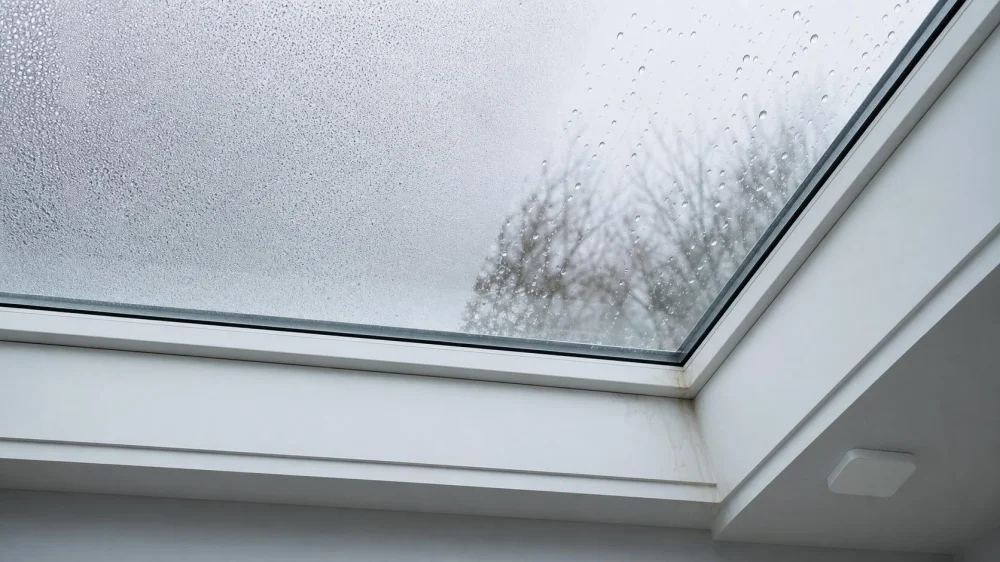
Moisture forming evenly on the room-side glass during cold weather often suggests condensation, while water entering at one frame corner during rain or snowmelt may indicate a skylight, flashing or roof leak. The patterns can overlap. Photograph the exact wet location, record weather and indoor humidity, protect finishes below and have a qualified roofer inspect exterior flashing safely. Do not climb onto the roof or smear sealant around the symptom.
Harry's Construction Inc.
MarlboroughMiddlesex CountyMassachusetts
561 Boston Post Rd E Suite 2, Marlborough, MA 01752, USA
Condensation and leakage defined
Skylight condensation occurs when humid indoor air contacts a surface below its dew point and water forms on the interior glass, frame or adjacent finish. A skylight-area leak is water entering from outdoors through roofing, flashing, the skylight assembly or a nearby roof defect.
Water can travel along framing before appearing, and condensation can drip onto the same trim that a leak would stain. A single photograph rarely proves the source.

Pattern clues to document
More consistent with condensation
- Fine droplets or fogging across a broad interior glass area.
- Occurrence during cold weather, showers, cooking or high indoor humidity.
- Moisture along the lower edge where droplets collect.
- Similar condensation on nearby windows.
- Improvement when indoor moisture and ventilation are controlled.
More consistent with exterior water entry
- A drip from one corner, shaft seam or ceiling area during rain.
- Staining that extends uphill or beside the skylight.
- Symptoms during wind-driven rain or snowmelt but not ordinary cold dry days.
- Damaged shingles, debris or flashing visible with safe ground-level zoom.
- Wet insulation or deck staining above the interior finish.
Neither list is conclusive. Ice dams, air leakage, failed glazing seals and roof leaks can create mixed patterns.
Safe indoor inspection checklist
- Keep people and electronics away from drips.
- Photograph glass, frame, shaft and ceiling before wiping water.
- Mark stain edges lightly on removable tape, not directly on finish.
- Record outdoor temperature, rain, wind, snowmelt and indoor humidity.
- Check whether bath or kitchen exhaust was running and vents outdoors.
- Inspect only safely accessible attic space without stepping off walk boards or disturbing wet electrical components.
- Use ground-level camera zoom for exterior context; do not use a ladder in wet weather.
Best homeowner role: pattern documentation and protecting the room. Not suitable for DIY: roof access, glazing disassembly, flashing removal or probing wet ceilings near wiring.
What a professional may evaluate
- Roof covering and underlayment around the opening.
- Head, sill and side flashing integration.
- Debris or ice that redirects water.
- Skylight gaskets, glazing seals, weep paths and frame joints.
- Shaft insulation, air sealing and vapour control.
- Indoor humidity sources and exhaust performance.
- Roof deck, insulation and framing moisture.
- A separate roof leak uphill from the skylight.
Choose the response by cause
For condensation, useful measures may include source ventilation, indoor humidity control, air sealing and insulation designed for the assembly. Do not block required skylight drainage or ventilation paths.
For exterior entry, work may include correcting roofing and flashing, clearing safe drainage paths, replacing failed skylight components or replacing the unit when age, compatibility or damage makes repair unreliable. Interior paint comes last, after source control and verified drying.
Use temporary containers and protective sheeting indoors without attaching anything to wet ceilings. Active water near lighting or wiring requires qualified electrical safety assessment.
Questions for a roofer or skylight specialist
- Where is the water first entering or condensing?
- What weather and indoor conditions support that conclusion?
- Is the flashing kit correct for roof material and slope?
- Is water present in deck, insulation or shaft framing?
- Can the defect be repaired without replacing the unit?
- How will exterior and interior layers be documented?
- What manufacturer instructions and warranty terms apply?
- When can interior finishes safely be closed and painted?
Important notes and evidence boundaries
This guide reflects general U.S. roof-window and building-envelope practice. Climate, skylight design, roof slope and manufacturer details vary. It is not a remote moisture diagnosis.
Do not use a garden hose test without a professional plan; uncontrolled water can create damage and may not reproduce wind-driven conditions. Do not cover a suspected leak with exterior caulk as the sole diagnosis.
Frequently asked questions
Why does my skylight drip only in winter?
Indoor condensation, snowmelt and ice-related water entry are all possible. Record whether moisture begins on the glass or at a surrounding joint.
Does fog between panes mean a roof leak?
Fogging sealed between glazing panes more often indicates a glazing seal issue, not necessarily roof flashing. The unit should be assessed.
Can a dehumidifier fix the problem?
It may reduce condensation, but it will not repair exterior water entry, missing insulation or an air leak by itself.
Should I replace the skylight during reroofing?
Age, condition, flashing compatibility and future access matter. Ask for separate repair and replacement reasoning.
Can water come from above the skylight?
Yes. Roof water can travel along deck or framing and appear at the opening, so the inspection should extend uphill.
Next steps
Photograph the exact moisture origin, log weather and humidity, and protect the room below. Arrange an inspection covering the roof uphill, flashing, glazing, shaft air sealing and hidden moisture. Repair the verified source before refinishing stains.

 3 Clovers Roofing & Construction Inc.4.0 (57 reviews)
 Max Roofing LLC5.0 (6 reviews)
 Universal Builders of America4.0 (14 reviews)
 Go4Roof.com5.0 (27 reviews)
 More Core Construction4.0 (107 reviews)
 Respectable Roofing4.0 (72 reviews)
 How to Choose a Roof Color for a Commercial Building for Brand Identity
 How to Install Ice and Water Shield for Maximum Leak Protection
 How to Choose a Roofing Contractor Active in Industry Associations – A Guide for Homeowners
 The Cost of a Roof Replacement with a Non-Combustible Material for Code Compliance
 Best Roofing Materials for Mid-Century Modern Homes: Top Options for Style and Durability
 How to Choose a Roofing Contractor That Uses Energy-Efficient Materials