
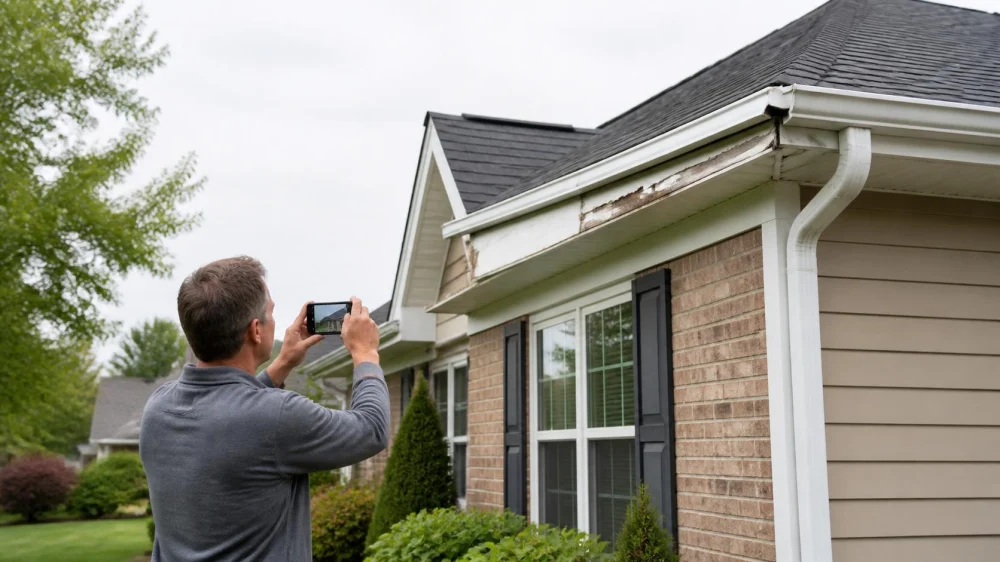
Soft or Peeling Fascia: Check the Roof Edge and Gutters
On this page
Quick answer
Peeling paint, staining, softness, gaps, or sagging at the fascia can indicate repeated wetting, failed finish, gutter problems, roof-edge details, or damaged wood and trim. Keep people away from loose gutters or material, photograph the full edge from the ground, and note rainfall and overflow patterns. Have the roofer and gutter or exterior-trim contractor identify the water source before replacing or painting fascia.
Do not press, probe, pull, or climb to test suspected decay. Components can detach without warning.

What fascia does
Fascia is the vertical finish at many roof edges. It can support gutter attachments, cover rafter or truss ends, and connect roof-edge, soffit, and wall finishes. Material may be wood, engineered trim, metal-wrapped board, vinyl components, composite, or another system.
Because several assemblies meet there, apparent fascia damage may begin at the roof, gutter, flashing, fasteners, soffit, or coating rather than the visible board alone.
Imperial Construction and Carpentry, Inc.
MilfordWorcester CountyMassachusetts
23 Water St, Milford, MA 01757, USA
Ground-level warning signs
- Peeling, blistering, cracked, or missing paint
- Dark streaks, rust stains, algae, or persistent discoloration
- Waves, swelling, open joints, or uneven trim
- Loose, tilted, or pulling gutter sections
- Water running behind the gutter or dripping from the soffit
- Bird, insect, or animal activity at gaps
- Pieces on the ground or exposed fasteners
Use binoculars or camera zoom from a safe distance. Do not stand beneath a visibly loose section.
Possible moisture paths
Gutter overflow, blocked outlets, improper slope, failed joints, missing drip-edge engagement, roof runoff, ice, damaged shingles, flashing gaps, unsealed end grain, failed paint, and trapped moisture behind metal wrap can contribute. A roof valley or upper roof can concentrate water far from the visible damage.
Condensation and ventilation conditions at the soffit or attic may also be relevant. The inspector should follow water from roof surface to final downspout discharge.
Protect the area
Keep doors, walkways, vehicles, and seating outside the fall zone. Do not hang decorations, ladders, lights, or hoses from damaged fascia or gutters. During rain, observe from indoors or a protected ground location.
Check accessible interior ceilings and attic access surroundings for moisture without entering wet, hot, cramped, or structurally uncertain areas. Seek urgent help for active heavy leakage, falling materials, electrical exposure, or a gutter detaching from the building.
Coordinate the inspection
Ask a qualified roofer to assess shingles or other roof covering, edge flashing, underlayment termination, roof deck edge, and drainage. A gutter professional should check attachment, slope, capacity, outlets, joints, and discharge. Exterior carpentry or siding expertise may be needed for fascia, soffit, trim, and finishes.
Request photographs before anything is covered. Moisture-damaged material should not simply be wrapped in new metal or coated with paint.
Questions for the repair scope
- What is the documented water source?
- Which fascia and supporting materials are sound or damaged?
- Must the gutter be removed and reinstalled?
- How will roof-edge flashing direct water correctly?
- What material, primer, fasteners, and clearances are specified?
- How will soffit ventilation remain open?
- How will the repair be tested and photographed?
- Who warrants each part of the coordinated work?
Frequently asked questions
Can I repaint peeling fascia?
Only after the moisture source and material condition are addressed and preparation follows the coating system.
Does a loose gutter mean fascia is rotten?
Not always. Fasteners, installation, loads, and substrate condition all need inspection.
Can metal wrap hide damaged wood?
Yes. Ask how the underlying board will be evaluated before wrapping.
Why does water drip behind the gutter?
Roof-edge alignment, flashing, gutter position, blockage, or overflow may be involved.
Who should repair fascia?
The cause may require coordinated roofing, gutter, and exterior carpentry work.
Sources and evidence notes
This guide applies building-envelope water management, fall-zone safety, roof-edge coordination, and repair-documentation principles. Exact fascia, flashing, gutter, ventilation, and finish details vary by roof and wall system, climate, product, and code.
Use manufacturer instructions, local requirements, and qualified roofing, gutter, and exterior contractors.
Conclusion and next steps
Photograph the entire roof edge, record where water moves during rain, and keep the space below clear. Ask the contractor to expose and document enough of the assembly to identify the source and damaged material. Correct roofing and drainage first, replace only what is unsound, then finish the fascia so new paint or wrap is not hiding the same wet condition.

 Regensburg Roofing Company Inc.5.0 (1 reviews)
 Bluefield Builders Roofing4.0 (7 reviews)
 Warren Thompson0.0 (0 reviews)
 MasterCraft Chimney Sweep & Cleaning0.0 (0 reviews)
 Happy Days Roofing0.0 (0 reviews)
 Monarch roofing&construction5.0 (148 reviews)
 How to Repair a Roof Leak from a Rooftop Water Feature or Pond
 The Pros and Cons of DIY Roofing vs. Hiring a Professional
 How to Install a Roof Underlayment for a Cedar Shake Roof | Expert Roofing Tips
 How to Choose the Best Roofing Material for a Shady, Damp Environment
 Understanding the Cost of a New Roof with an Energy Star Rated Reflective Coating
 Roofing Change Order: Check Scope, Price, and Approval