Storm-Damage Roof Repair: Verify the Contractor First
On this page
Quick answer
After a storm, address immediate hazards and interior water safely, but verify a roofing contractor before authorizing permanent work. Match the company, salesperson, address, phone, required license or registration, and insurance through independent sources. Get a written scope and payment schedule, preserve storm evidence, and never let urgency replace identity checks or contract review.
Stabilize danger without rushing a contract
Storm-damage roof repair verification is the process of confirming who is offering the work, whether they meet applicable requirements, and what they will actually provide before money or access changes hands.
Begin with life safety. Stay away from downed lines, unstable trees, damaged ceilings, standing water near electricity, loose exterior materials, and suspected structural movement. Contact emergency services or the utility when appropriate. Do not climb onto a wet, wind-damaged, icy, or unfamiliar roof.
Temporary water control may be necessary, but define it as temporary stabilization. Record who installed it, what area it covers, the price, and whether it affects later inspection or repair. Do not sign a broad reconstruction or insurance-assignment document merely to obtain a tarp.
Verify contractor identity and standing
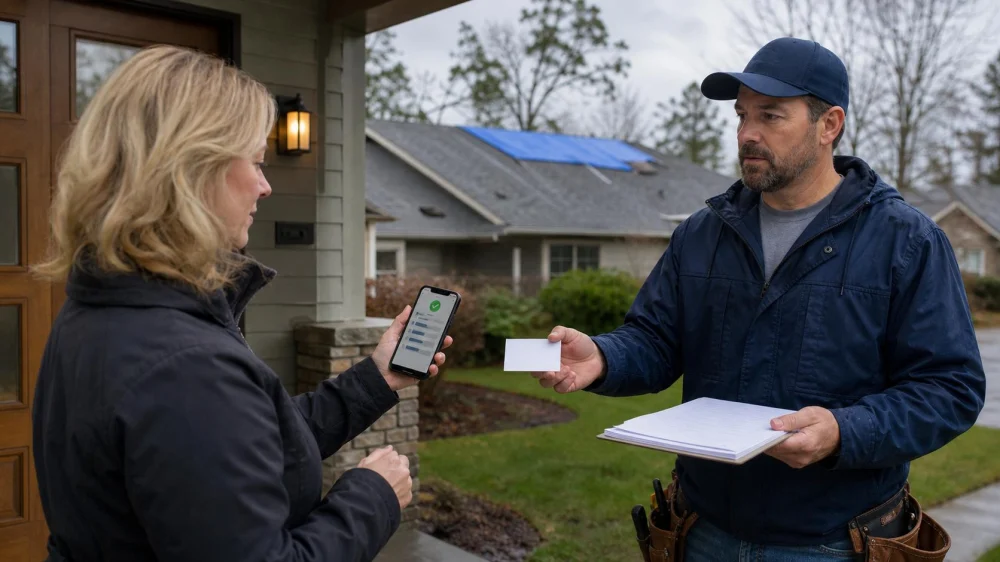
Use details you obtain independently, not only a door hanger, truck, text, or link supplied by the salesperson.
- Ask for the legal business name, physical address, phone number, website, and the representative's full name.
- Check the company through the relevant state or local business and contractor authority.
- Determine whether the project location and scope require a roofing or contractor license or registration.
- Match the credential holder and status to the company named in the contract.
- Ask the insurance carrier or agent to confirm current coverage and relevant policy details; do not rely only on a certificate image.
- Check how long the business identity and address have been in use, while recognizing that a newer business is not automatically fraudulent.
- Call references for recent comparable work and ask how corrections and cleanup were handled.
A directory listing or online review can help with discovery but does not replace current credential and identity verification.
Control scope, insurance, and payment
Separate the contractor's repair proposal from the insurer's coverage decision. A contractor can document damage and estimate work, but should not guarantee what an insurer will pay unless authorized and qualified to make that determination under applicable rules.
The written agreement should identify roof areas, removal, decking allowances, materials, flashing, ventilation, debris, property protection, permits, inspections, schedule, change orders, warranties, and payment stages. Avoid blank spaces and verbal additions.
Use a traceable payment method to the verified legal business. Be cautious about large upfront demands, cash-only instructions, gift cards, transfers to an unrelated individual, or a sudden change in bank details. Confirm any change through a known company number.
Recognize pressure and warning signs
- “Your roof is unsafe” without photographs, scope, or an explanation you can independently assess;
- a demand to sign immediately because a price, crew, or insurance opportunity will disappear;
- refusal to provide a credential number, insurance contact, or complete contract;
- a business name on the contract that differs from the truck, payment recipient, or credential;
- an offer to waive a deductible, conceal information, or misstate damage;
- a request for remote access to your bank or insurance account;
- inspection activity that damages shingles or occurs without permission; or
- pressure to endorse an insurance check before materials or verified work milestones.
One unusual detail may have an explanation. Multiple unresolved mismatches are a reason to stop and choose another contractor.
Use a contractor verification checklist
- Photograph from safe locations. Record the property and interior damage without climbing.
- Notify the appropriate insurer. Use the number from your policy or official account.
- Define temporary work. Authorize only the stabilization you understand.
- Collect identical identity fields. Compare business, credential, insurance, contract, and payment names.
- Obtain more than one written scope when practical. Compare missing work and assumptions, not only totals.
- Check permits and local rules. Assign responsibility in writing.
- Review before signing. Ask a qualified lawyer or advisor about unfamiliar assignments, waivers, or financing terms.
- Pay by documented milestones. Preserve invoices, receipts, changes, and communications.
Limitations and safety notes
- Contractor licensing, registration, cancellation rights, insurance, liens, and storm-work rules vary by state and locality.
- This article provides general consumer and safety guidance, not legal, insurance, engineering, or claims advice.
- Only trained, properly equipped people should access a damaged roof.
- Seek structural, electrical, fire, tree, mold, or water-mitigation professionals when the damage extends beyond roofing.
- Do not delay emergency help while comparing ordinary repair bids.
Frequently asked questions
Is a contractor at my door necessarily a scam?
No, but an unsolicited visit does not verify identity or qualifications. Apply the same independent checks and do not sign under pressure.
Can a roofer inspect the roof before I sign?
Policies vary. Give explicit permission, ask about access and safety, and request ground or roof photographs. Clarify whether the inspection is free and whether it creates any obligation.
Should I give the contractor my full insurance claim login?
No. Share only information needed for an authorized task. Do not provide passwords or remote account access.
What if the insurer recommended a contractor?
Still confirm identity, scope, credentials, insurance, contract terms, and your choices. Ask how the recommendation affects warranties, payment, and responsibility.
When should I contact a lawyer?
Consider local legal advice before signing unfamiliar assignments or financing, when a lien or cancellation dispute arises, or when identities, damage claims, or payment instructions conflict.
Conclusion and next steps
Handle urgent hazards first, then slow the permanent repair decision down enough to verify it. Match every business identity, credential, policy, contract, and payment detail. Choose a contractor who can explain the scope without pressure and document how the work will be authorized, inspected, paid, and closed.
Evidence note: These recommendations reflect common storm-recovery, contractor-verification, payment-security, and property-documentation practices. Applicable duties come from local rules, contracts, insurance documents, and project facts.
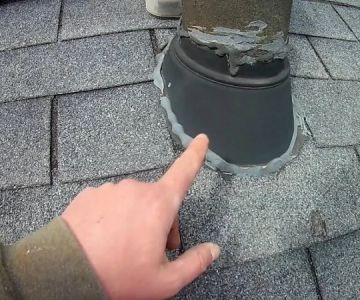
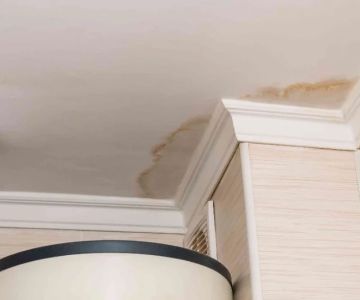
 Kramer Restoration4.0 (30 reviews)
 American Custom Contractors4.0 (572 reviews)
 Thomco Inc0.0 (0 reviews)
 Aspen Home Remodeling, LLC.5.0 (259 reviews)
 H&S Roofing, LLC5.0 (27 reviews)
 Long Home4.0 (803 reviews)
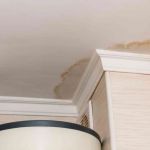 Ceiling Water Stain but No Active Drip?
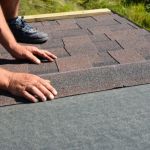 How to Install Roof Shingles in High Wind Conditions
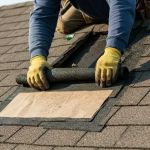 How to Repair a Roof Leak from a Rooftop Greenhouse or Garden Structure
 How to Install a Roof Cricket Behind a Rooftop Mechanical Screen: A Step-by-Step Guide
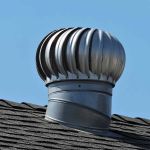 How to Choose a Roof Ventilator: Static, Powered, Turbine, or Ridge?
 How to Choose a Roofing Material for a Building Exposed to Saltwater Spray