
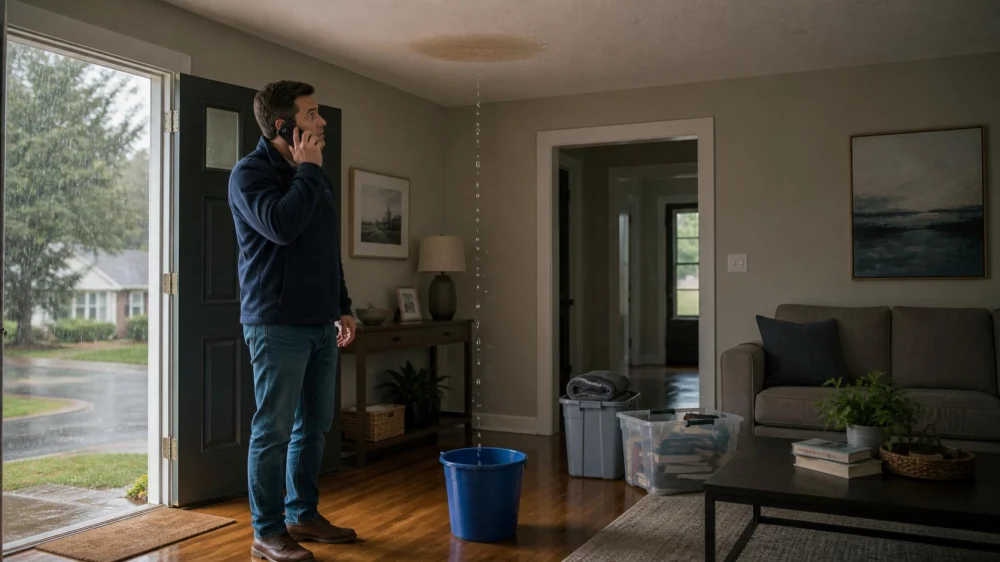
Roof Leak During Rain: Protect the Interior Safely
On this page
Quick answer
During an active roof leak, keep people away from wet ceilings and electricity, move belongings from dry access routes, and place containers only where the ceiling is stable. Do not climb onto a wet roof or puncture a ceiling bulge. Photograph the water path, call an emergency roofer, and arrange moisture assessment after the source is stabilized.
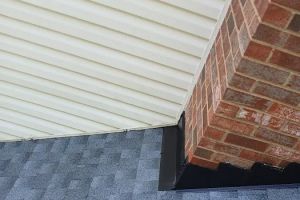
Just Exteriors LLC
North BrentwoodPrince George's CountyMaryland
4547 Rhode Island Ave, North Brentwood, MD 20722, USA
First actions
- Move children and pets out of the affected room.
- Stay clear of sagging drywall, falling insulation, and slippery floors.
- Move dry belongings from nearby areas without standing under damage.
- Call an emergency roofing professional.
- Notify a landlord, manager, or insurer when applicable.
- Follow evacuation instructions during severe weather.
Avoid electrical hazards
Water can travel along wiring and enter lights, fans, smoke alarms, outlets, and appliances. Do not touch wet fixtures or switches. If the electrical panel is dry and safely accessible, turn off the clearly labeled affected circuit; otherwise leave the area and call an electrician or emergency services.
Smoke, sparks, buzzing, burning odor, or shock sensation requires evacuation and emergency help. Do not repeatedly reset breakers.

Watch the ceiling
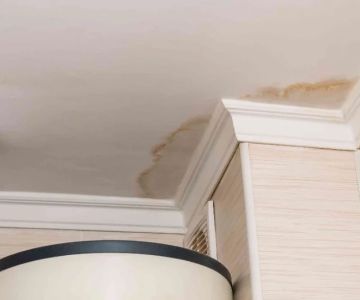
A dark stain, bubbling paint, sag, or bulge may indicate water above the ceiling. Do not stand beneath it or puncture it. Although online tips sometimes suggest making a drainage hole, hidden wiring, contaminated water, unstable material, and sudden collapse make that dangerous.
Close the room and wait for qualified help. If material falls, keep everyone away and avoid disturbing older insulation or coatings that may contain hazardous substances.
Contain water safely
On a stable floor away from electricity and ceiling damage, place a bucket under a simple drip. Add towels around it to reduce slips and check the container without entering a hazard zone. Do not tape plastic to a failing ceiling.
Protect furniture only when it can be moved from the side. Do not climb onto chairs or ladders during an active leak.
Document the pattern
- Record time, rainfall, wind direction, and when dripping began.
- Photograph room overviews and stain boundaries from a safe place.
- Note attic moisture only where access and flooring are safe.
- List damaged belongings without discarding them prematurely.
- Save emergency calls, estimates, invoices, and moisture readings.
The visible drip may be far from the roof entry because water follows decking and framing.
Stay off the roof
Rain makes roofs, ladders, tarps, leaves, and moss slippery. Wind, lightning, darkness, and concealed deck damage increase risk. Do not walk up to find the hole, spread sealant, or install a tarp yourself.
An insured contractor can decide whether conditions allow emergency stabilization. Some storms require waiting until weather improves.
What professionals should check
The roofer should trace the likely water path and inspect shingles or membrane, flashing, penetrations, valleys, drainage, deck, and temporary protection. Ask for before-and-after photos and a clear distinction between emergency work and permanent repair.
An electrician may need to inspect wet circuits. A restoration professional can map moisture in ceilings, insulation, walls, and floors.
Dry the building
Source control comes first. Remove standing water after electrical and structural hazards are cleared, then dry affected materials promptly. Surface dryness does not prove cavities and insulation are dry.
Do not aim fans into contaminated water or suspected mould without assessment. Keep drying logs and confirm moisture goals before closing or painting assemblies.
Important limitations
This article is general emergency information, not roofing, electrical, structural, remediation, or insurance advice. Conditions vary. Emergency responders and on-site qualified professionals determine safe access, stabilization, and drying.
Sources and evidence notes
- Federal Emergency Management Agency: severe-weather and post-storm safety guidance.
- Electrical Safety Foundation International: water and electrical hazard information.
- U.S. Environmental Protection Agency: moisture control and prompt drying principles.
- Roofing manufacturers and contractors: system-specific emergency and permanent repair requirements.
Frequently asked questions
Should I puncture a bulging ceiling?
No. Keep clear and call qualified help because wiring, sudden collapse, and contaminated water may be involved.
Can I tarp the roof in the rain?
Do not climb onto a wet or storm-exposed roof. An insured professional must judge safe timing and method.
Does the stain show where the roof failed?
Not necessarily. Water can travel along framing before appearing. A full water-path inspection is needed.
When should I call insurance?
Review the policy and report material damage promptly. Take reasonable emergency steps and keep records without delaying safety action.
Conclusion
In an active roof leak, interior safety comes first. Avoid wet electricity and unstable ceilings, contain only accessible drips, document the pattern, and stay off the roof. Professional source control and measured drying protect the home more effectively than a risky emergency patch.


 Hernandez & Sons Roofing4.0 (34 reviews)
 Miller & Sons Roofing & Remodeling4.0 (34 reviews)
 Colonial Remodeling LLC3.0 (6 reviews)
 Dream Home Roofers5.0 (245 reviews)
 EXTERIORS ASSOCIATES INC. Our 25th Year!0.0 (0 reviews)
 Alb Best Way Construction5.0 (66 reviews)
 How to Install Roof Flashing on a Roof with a Combination of Steep and Flat Sections
 How to Clean Solar Panels on a Roof Without Damaging Shingles or Voiding Warranties
 How to Choose a Roofing Contractor That Specializes in Complex Historic Restoration
 How to Choose a Roofing Material That Compliments Your Siding
 The Pros and Cons of a Modified Bitumen (Mod Bit) Roof
 Rubber Roofing for Flat Roofs EPDM vs TPO vs PVC Comparison Guide