
Roof Repair Landscaping Plan: Protect Plants and Plan Cleanup
On this page
Quick answer
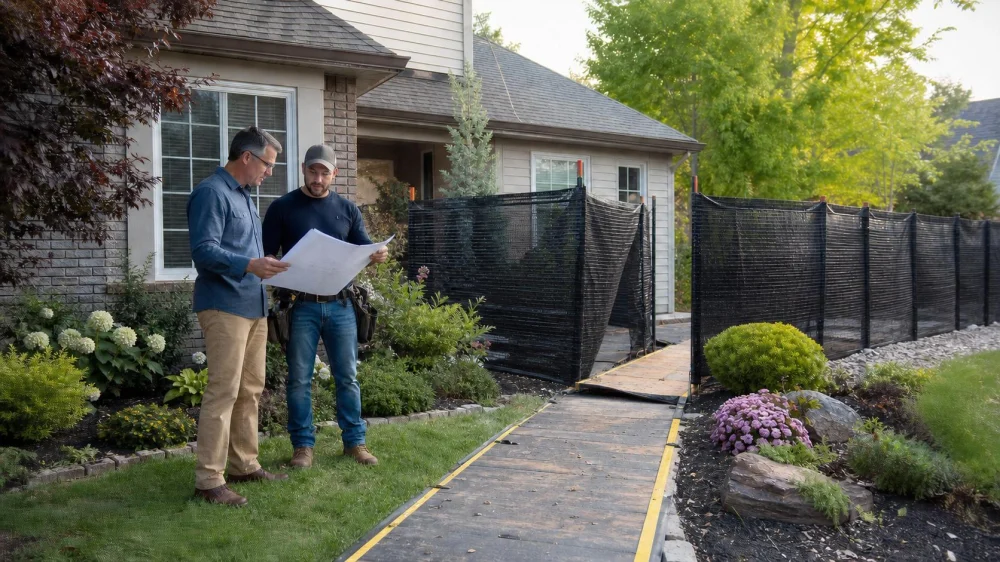
Before roof repair starts, walk the property with the contractor and map fragile plants, irrigation, lighting, edging, ponds, fences, gates, utilities, and access routes. Agree where ladders, materials, debris, vehicles, and workers will move; which plants the owner relocates; how protection stays ventilated; and who handles daily and final cleanup. Photograph the landscaping before work and inspect it together afterward.

MC PROFESSIONAL HOME IMPROVEMENT CORP
ElmsfordWestchester CountyNew York
22 Woodside Ave, Elmsford, NY 10523, USA
Map vulnerable areas
Roof debris follows gravity, but the safest landing and cleanup route must be planned. Identify beds beneath eaves, valleys, dormers, chimneys, and material-loading points. Note delicate branches, new plantings, raised beds, decorative stone, soft lawns, low-voltage wiring, irrigation heads, drains, and features hidden by foliage.
Create a simple site map from ground level. Mark no-step zones, agreed access, material staging, debris collection, and the path to the vehicle or container. Tell the contractor about invisible or seasonal features such as buried drip lines, dormant bulbs, shallow pipes, invisible pet fencing, and automatic sprinklers.
Photograph each side of the house and close views of valuable or vulnerable areas. The goal is a shared baseline, not an argument after work.

Separate access and protection
Decide where ladders, lifts, scaffolds, carts, and workers can stand. A route that protects flowers but crosses a septic component, soft soil, overhead branch, utility, or steep grade simply moves the risk elsewhere.
Agree on delivery and removal timing so materials do not rest on lawns or beds longer than planned. Identify turning space, gate width, hose bibs, exterior outlets, and areas that must remain open for residents, emergency access, or waste collection.
Use visible temporary boundaries that do not create a trip hazard. Keep occupants and pets out of work and debris zones. Only the contractor should adjust protection inside an active drop area.
Use plant-safe methods
Move portable pots, ornaments, feeders, furniture, and fragile garden items before the crew arrives. Ask a qualified landscape professional about pruning or transplanting valuable plants; do not cut branches merely for convenience without owner approval.
Protective frames or barriers should keep debris off plants without crushing foliage. Avoid sealing living plants under heavy or non-breathable covers for extended periods, especially in sun or heat. Ask who removes or ventilates temporary protection at the end of each work period.
Coordinate irrigation. Sprinklers can wet materials, create slippery access, or spray an open roof, while an extended shutdown can harm plants. Record which zones are paused, by whom, and when they restart. Do not disconnect pumps, lighting, or controls without understanding the system.
Inspect and restore
Plan daily collection before debris disappears into mulch or grass. The crew may use tarps, catchment, hand pickup, sweeping, and magnetic tools as appropriate, but magnets do not find every material and can miss nails beneath dense plants or nonferrous debris.
At closeout, walk beds, lawn edges, paths, gutters, drains, window wells, decks, and staging points from the ground. Check broken branches, compacted soil, displaced mulch, damaged irrigation, crushed edging, fasteners, packaging, and construction dust. Keep children and pets away until the area is cleared.
Record corrections and responsibility in a punch list. Restart irrigation only after checking exposed heads and lines, then monitor plants for delayed heat, compression, or watering stress.
Landscape checklist
- Fragile plants and hidden systems mapped.
- Before photos captured.
- Equipment, worker, and debris routes agreed.
- No-step and no-storage zones marked.
- Portable items moved by the assigned person.
- Ventilated plant protection planned.
- Irrigation pause and restart recorded.
- Daily debris collection assigned.
- Final ground-level walk and punch list completed.
Limitations and safety notes
This guide does not design fall protection, equipment placement, rigging, horticultural care, utility clearance, or site safety. Conditions vary by roof, property, weather, plant, soil, equipment, and local rules. Stay outside active work and drop zones. Use qualified roofing, landscape, utility, arborist, or site professionals when the condition requires them.
FAQ
Should I cover shrubs myself?
Coordinate first. The contractor may need a specific access and debris-control plan, and a heavy cover can damage plants.
Can magnetic cleanup find every roofing nail?
No. Dense soil or foliage, depth, and nonmagnetic materials require visual and hand cleanup too.
Should irrigation stay off for the whole project?
Not automatically. Coordinate safe work periods with the plants' needs and record the restart.
Who pays for plant damage?
The signed contract, documented condition, cause, and applicable rules matter. Clarify responsibility before work.
Evidence notes
This guide applies common site-protection controls: pre-work mapping, defined access, separated drop zones, ventilated protection, irrigation coordination, daily housekeeping, before-and-after photos, and a final punch list. It does not specify a universal protection system.
Next steps
Walk the perimeter with the contractor and mark three things on one photo or sketch: vulnerable plants, approved routes, and debris zones. Move portable items, record irrigation status, and schedule the final landscape walk before the crew leaves.





 Hernandez & Sons Roofing4.0 (34 reviews)
 Miller & Sons Roofing & Remodeling4.0 (34 reviews)
 Colonial Remodeling LLC3.0 (6 reviews)
 Dream Home Roofers5.0 (245 reviews)
 EXTERIORS ASSOCIATES INC. Our 25th Year!0.0 (0 reviews)
 Alb Best Way Construction5.0 (66 reviews)
 How to Install Roof Flashing on a Roof with a Combination of Steep and Flat Sections
 How to Clean Solar Panels on a Roof Without Damaging Shingles or Voiding Warranties
 How to Choose a Roofing Contractor That Specializes in Complex Historic Restoration
 How to Choose a Roofing Material That Compliments Your Siding
 The Pros and Cons of a Modified Bitumen (Mod Bit) Roof
 Rubber Roofing for Flat Roofs EPDM vs TPO vs PVC Comparison Guide