
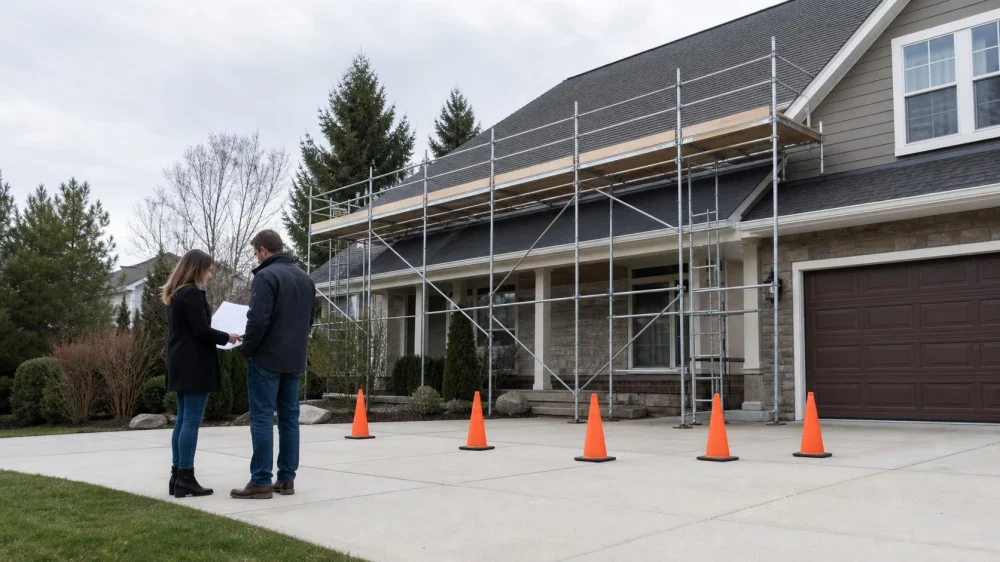
Roof Repair Scaffold Plan: Access, Exclusion, and Removal
On this page
Quick answer
Before roof repair begins, confirm who designs, supplies, erects, inspects, changes, and removes any scaffold. Map ground conditions, utilities, doors, paths, neighbours, falling-object zones, deliveries, and emergency access. Keep occupants away from the structure, never alter it, and require the responsible competent professionals to address weather, tags, loading, ties, platforms, and changes.

Heritage Systems Inc.
WaterburyNaugatuck Valley Planning RegionConnecticut
348 Huntingdon Ave, Waterbury, CT 06708, USA
Why scaffold planning is part of the repair scope
Scaffolding affects far more than roof-edge access. Loads reach the ground, ties interact with the building, platforms change delivery routes, and components can block doors, windows, utilities, cameras, lighting, or emergency paths. Wind, rain, soil, slopes, overhead lines, public access, and work sequencing influence design and inspection, so a generic photo is not a site plan.
This guide is for United States homeowners and property managers coordinating roof repair that may use scaffolding. It is not an erection, alteration, inspection, engineering, fall-protection, or regulatory-compliance manual. Contractors and qualified responsible persons must apply current federal, state, local, manufacturer, and site requirements.

Practical checklist
- The roofing scope, elevations, roof edges, work areas, material loads, debris handling, duration, and sequence requiring access.
- Scaffold designer or responsible provider, erector, competent inspection role, roofer, property contact, and authority for changes.
- Soil, paving, slopes, drains, vaults, basements, landscaping, irrigation, buried services, overhead lines, and load-bearing limitations.
- Doors, windows, balconies, driveways, gates, public sidewalks, neighbour property, mail, waste collection, and emergency routes.
- Access points, ladders or stairs supplied by the scaffold system, platform levels, loading areas, guardrails, toe boards, netting, and falling-object controls.
- Daily and event-triggered inspection, status tags where used, weather and wind limits, unauthorized access controls, lighting, and reporting.
- Tie or anchor locations, façade protection, alarms and cameras, final hole or finish repairs, removal date, ground restoration, and closeout records.
Step-by-step plan
- Ask the roofer what access and loading the repair requires, then identify the scaffold provider and the person responsible for site-specific design and inspection.
- Walk the property from ground level with the responsible contractors and map utilities, surfaces, drainage, openings, travel paths, neighbours, and emergency access.
- Obtain a written layout and scope covering erection, ties, platforms, access, exclusions, protection, inspections, weather, alterations, removal, and damage repair.
- Notify occupants and affected neighbours of dates, blocked areas, noise, parking, deliveries, windows to keep closed, and a single contact for concerns.
- Secure the exclusion zone before components arrive. Keep children, pets, vehicles, deliveries, and unapproved workers outside it.
- During work, check only from a safe distance that status controls and barriers remain in place. Report changes, impact, severe weather, or unauthorized entry; never adjust components.
- After removal, inspect the ground, façade, ties, openings, gutters, paths, landscaping, fasteners, and debris with the responsible contractors and document corrections.
Keep the access plan, contractor and scaffold provider details, design or layout documents, permits where required, inspection responsibility, erection and removal dates, weather events, status reports, change authorizations, neighbour notices, photos from safe areas, damage records, anchor repairs, and final sign-off.
Limits and important notes
Do not climb, move boards, remove ties, adjust levelling components, hang tarps or signs, add loads, unlock access, or use scaffold as storage. Do not assume a barrier makes every nearby path safe. Homeowners cannot verify structural adequacy by appearance, and a scaffold used by one trade may not suit another trade or added material.
Keep everyone clear and contact the responsible scaffold provider and contractor after impact, movement, missing components, visible settlement, unauthorized alteration, severe wind, flooding, electrical concerns, or a failed barrier. Call emergency services for collapse, contact with power lines, serious injury, fire, or immediate public danger.
Frequently asked questions
Who should inspect roofing scaffold?
The responsible employer and qualified or competent persons must meet applicable rules; the homeowner should confirm the role in writing, not perform it.
Can I walk under scaffold to reach my door?
Use only the route specifically approved and protected in the site plan. If access changes, contact the responsible contractor.
May another trade use the scaffold?
Not automatically. Loading, access, platform, training, and employer responsibilities must be confirmed before any additional use.
What happens after high wind?
Follow the site weather plan, keep clear, and require the responsible inspection before work or access resumes as applicable.
Who repairs scaffold tie locations?
Assign removal and permanent weather-resistant repair responsibility, materials, timing, and documentation in the written scope.
Sources and evidence
Use the site-specific scaffold design and provider instructions, roofing work plan, current OSHA and applicable state or local requirements, utility guidance, permits, and qualified inspection records. Manufacturer and engineered requirements control component compatibility, loading, ties, access, and weather limits.
Conclusion and next steps
Treat scaffolding as a coordinated temporary structure, not a delivery detail. Define design, erection, inspection, access, loading, exclusions, weather, changes, and removal before work begins. Keep occupants outside controlled areas, report changes without touching the structure, and close out ground, façade, tie, and debris repairs after removal.

 Edgepoint Roofing0.0 (0 reviews)
 Elite Roofing & Construction5.0 (4 reviews)
 Miller & Sons Roofing & Remodeling4.0 (46 reviews)
 Crain Roofing4.0 (149 reviews)
 Craftsman Roofing and Masonry2.0 (8 reviews)
 IronShore Contracting, LLC4.0 (17 reviews)
 The Average Cost of a Roof Coating for a Large Commercial Building | BeachCo Roofing Hub
 Roof Repair Near Outdoor HVAC: Protect Airflow and Access
 Metal Roof Gauges Explained: 24 Gauge vs 26 Gauge vs 29 Gauge for Residential
 How to Choose a Roof Color for a House with Dark Siding – BeachCo Roofing Hub
 Roofing Warranties Explained: Manufacturer vs. Workmanship Coverage
 Solar Panel Removal and Reinstallation Cost When Replacing Your Roof