
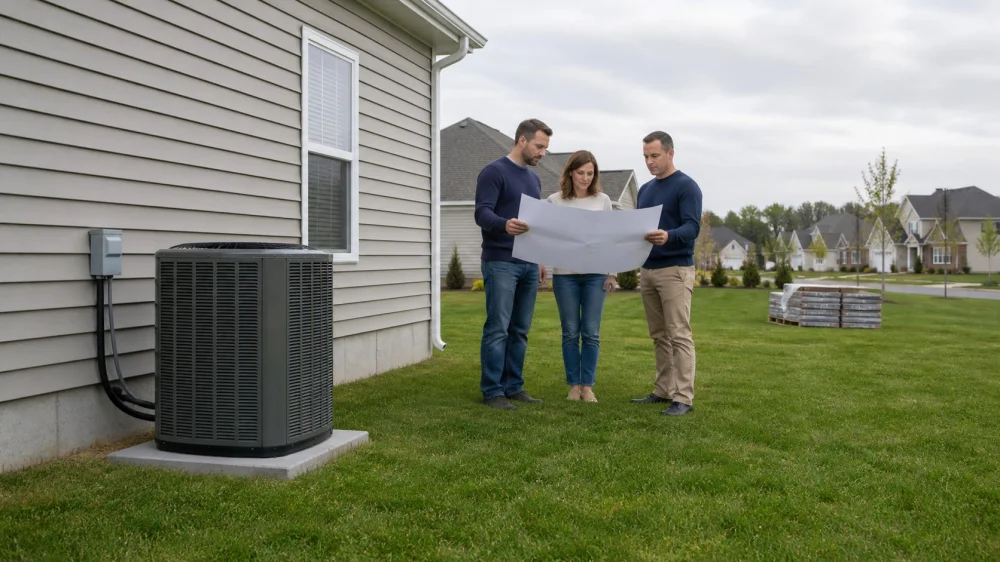
Roof Repair Near Outdoor HVAC: Protect Airflow and Access
On this page
Quick answer
Before roof work starts above or near an outdoor HVAC unit, identify the equipment, service clearances, disconnect, lines, drains, and normal airflow path. Have the roofer and qualified HVAC contractor agree on shutdown, temporary protection, debris control, inspection, and restart. Never wrap or run a unit under a solid cover, and keep roofing materials and foot traffic away.
Why roofing and HVAC work must be coordinated
Tear-off debris, granules, nails, dust, dropped tools, ladders, tarps, and foot traffic can affect outdoor coils, fans, cabinets, refrigerant lines, wiring, drains, and service access. At the same time, an operating condenser or heat pump needs unobstructed airflow and cannot simply be sealed against debris. Roof drainage and flashing work may also change water paths near the unit.
This guide is for United States homeowners and property managers coordinating roof repair near outdoor HVAC equipment. It is not an electrical, refrigerant, equipment-moving, covering, or restart procedure. Roofing and HVAC contractors must follow equipment instructions, codes, safety rules, and site conditions.
Spring Valley Roofing
West ChesterChester CountyPennsylvania
2 W Market St, West Chester, PA 19382, USA
Practical checklist
- Equipment type, model records, operating mode, location, service clearances, top and side airflow, and manufacturer instructions.
- Disconnect, wiring, refrigerant and condensate lines, line-set insulation, wall penetrations, brackets, pad, drains, and nearby controls.
- Roof edge, valley, gutter, downspout, tear-off, debris chute, ladder, scaffold, material staging, and worker travel routes above or beside the unit.
- Who may shut down, isolate, protect, inspect, uncover, and restart the equipment and how each handoff is confirmed.
- Protection design, ventilation while off, wind security, water shedding, impact resistance, access, duration, and removal responsibility.
- Dust and debris cleanup, coil and fan inspection, cabinet damage, line movement, drain path, pad stability, and service-area clearance.
- Indoor comfort, weather, vulnerable occupants, pets, refrigeration needs, alternate heating or cooling, and emergency contacts.
Step-by-step plan
- Show the roofer every outdoor HVAC component and provide equipment documents or service contacts before access and staging are finalized.
- Ask the roofing and HVAC professionals to assign shutdown, isolation, protection, inspection, and restart in a written coordination note.
- Reroute ladders, debris, materials, and routine foot traffic away from the equipment and its lines wherever the work plan allows.
- Use only a contractor-approved temporary protection method, with the unit off when required. Do not run equipment under a solid tarp or boxed enclosure.
- Keep disconnects and emergency access available to authorized workers and keep occupants away from the protected work zone.
- After roofing and cleanup, have the responsible professionals remove protection and inspect the cabinet, coil, fan area, lines, wiring, drains, pad, and clearances.
- Restart only through the assigned process, then retain findings, photos, service notes, damage corrections, and any changed drainage details.
Keep the roof and HVAC contractor contacts, equipment model information, pre-work photos, shutdown and restart times, protection scope, weather events, debris or impact reports, inspection findings, line or pad concerns, cleanup record, service invoice, and confirmation of restored clearances and drainage.
Limits and important notes
Do not move an outdoor unit, bend lines, open electrical equipment, handle refrigerant, remove fan guards, blow debris into coils, or improvise a cover. Do not assume the thermostat alone safely isolates every component. A unit that starts after work may still have damaged fins, shifted lines, blocked drainage, or reduced clearance.
Keep clear and call the appropriate contractor for damaged wiring, crushed or moved lines, hissing, oil residue, severe cabinet impact, smoke, burning odour, repeated breaker trips, abnormal fan movement, or a failed pad. Call emergency services for fire or immediate electrical danger and leave refrigerant or electrical assessment to qualified professionals.
Frequently asked questions
Can roofers cover an outdoor AC unit with a tarp?
A solid cover can block airflow and trap heat if the unit runs. Use only the coordinated method and operating status approved for the equipment.
Should the unit be moved for roof repair?
Moving equipment can involve refrigerant, electrical, structural, and code issues and requires qualified HVAC planning when necessary.
Who restarts the system?
Assign this in advance. The responsible qualified person should confirm protection is removed, access is clear, and inspection is complete.
Are a few roof granules on the cabinet harmless?
Surface debris does not reveal what entered coils or fan areas. Include equipment inspection and careful cleanup in the handoff.
What if cooling is essential during the project?
Tell both contractors early so timing, temporary protection, occupant needs, and an alternative comfort plan can be coordinated safely.
Sources and evidence
Use the HVAC equipment manufacturer instructions, roofing work and debris-control plan, current electrical and mechanical requirements, qualified contractor guidance, and service records. Product-specific airflow, clearance, shutdown, lifting, refrigerant, and restart requirements override generic assumptions.
Conclusion and next steps
Put the roof and HVAC scopes on the same site map. Assign who shuts down, protects, inspects, uncovers, and restarts the unit, and keep debris routes and staging away from it. A documented handoff protects airflow, lines, controls, service access, and drainage more reliably than a last-minute tarp.

 Roof Maintenance Systems5.0 (1 reviews)
 Middlesex Roofing Contractor Repair & Installation4.0 (4 reviews)
 Robert's Roofing, Inc.4.0 (27 reviews)
 Double Eagle Roofing5.0 (12 reviews)
 DG contracting services Inc0.0 (0 reviews)
 Roofing By Carl's0.0 (0 reviews)
 How to Choose a Roof Color for a House with Dark Siding – BeachCo Roofing Hub
 How to Work From Home During a Roof Repair Project
 The Pros and Cons of Green Roofs or Living Roofs: A Comprehensive Guide
 How to Repair a Roof Leak from a Rooftop Walkway or Bridge
 The Cost of a Roof Replacement with a Specialty Historic Reproduction Material
 Rubber Roofing for Flat Roofs EPDM vs TPO vs PVC Comparison Guide