
Roof Repair Warranty: Separate Materials From Workmanship
On this page
Quick answer
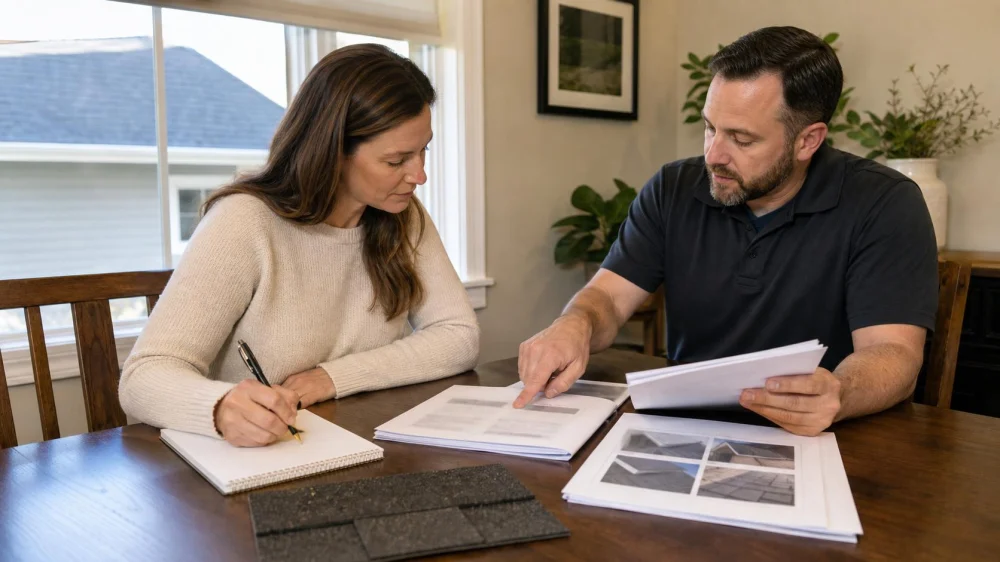
A roof repair may involve separate promises: a manufacturer warranty for eligible products and a contractor warranty for installation or repair workmanship. They can have different start dates, durations, exclusions, claim contacts, transfer rules, and remedies. Get each document before signing, identify exactly who backs it, and verify whether labor, tear-off, disposal, interior damage, emergency service, and repeat leaks are covered.
This article provides general consumer information for United States homeowners. Warranty law, contractor rules, implied rights, cancellation rights, and dispute procedures vary by state and transaction. The signed contract, written warranty, product terms, and applicable law control; seek qualified legal advice for a specific dispute.
Panda Exteriors
LaurelPrince George's CountyMaryland
14409 Greenview Dr Suite 202, Laurel, MD 20708, USA
Build a two-column coverage map
Start by separating the documents into two categories.
Material or manufacturer coverage may address a defect in shingles, membrane, underlayment, flashing component, sealant, fastener, coating, skylight, vent boot, or another named product. It may be provided by the product maker, distributor, or a warranty program.
Workmanship or contractor coverage may address how the contractor installed, integrated, or repaired materials. It is commonly backed by the roofing company that performed the work, although some manufacturer programs add installation-related coverage when eligibility conditions are met.
Do not assume one automatically pays for the other. A material may fail because of installation, and an installation problem may damage materials that are not themselves defective. The claim process can require an inspection to allocate responsibility.
| Question | Material coverage | Workmanship coverage |
|---|---|---|
| Who promises performance? | Named manufacturer or program | Named contractor or installer |
| What triggers a claim? | Defined product defect or failure | Defined installation or repair issue |
| Who inspects? | Manufacturer, representative, or approved contractor | Original contractor or stated third party |
| What is the remedy? | Product, prorated credit, or stated labor | Repair labor, materials, or stated correction |
| How is a claim filed? | Manufacturer portal or written process | Contractor notice process |
Fill the cells from the actual documents. Blank or vague cells are questions to resolve before work begins.

Warranty terms to check in writing
- Covered work. Does the warranty name the exact slope, repair location, penetration, flashing, material, and related work?
- Covered problem. Is coverage limited to leaks, or does it include detachment, wind resistance, seal failure, appearance, or another stated condition?
- Start and end dates. Does the period begin at contract signing, installation, completion, payment, inspection, or registration?
- Full versus prorated coverage. Does the remedy decrease over time or require the homeowner to pay a share?
- Labor and access. Are diagnosis, roof access, tear-off, disposal, replacement labor, lift rental, permits, and cleanup included?
- Related damage. Are decking, insulation, ceiling, paint, contents, mold remediation, and temporary protection excluded?
- Exclusions. Check weather events, structural movement, ventilation, drainage, other trades, pests, foot traffic, modifications, maintenance, and pre-existing conditions.
- Owner duties. Note inspection, maintenance, notice, recordkeeping, payment, access, and mitigation requirements.
- Remedy limit. Does the warrantor choose repair, replacement, credit, or refund? Is there a monetary cap?
- Dispute process. Check required notice, opportunity to inspect, mediation, arbitration, venue, attorney-fee, and limitation language.
A spoken promise may be difficult to prove and may not match the written contract. Ask the contractor to add an agreed term to the signed documents rather than relying on “we always take care of it.”
Registration, transfer, and contractor status
Registration: Some product or enhanced warranty programs require registration by a deadline and specific proof of purchase or installation. Ask who submits it, how you receive confirmation, and what happens if information is wrong.
Transfer: A warranty may be nontransferable, transferable once, transferable only within a stated period, or subject to notice and a fee. If you may sell the home, get the transfer procedure in writing and keep it with closing records.
Contractor certification: Some manufacturer programs require an approved or credentialed installer and a defined system of compatible products. Verify current status directly with the program before signing. A logo on a proposal does not establish current eligibility.
Business continuity: A contractor-backed workmanship promise depends on the entity responsible for it. Confirm the exact legal business name, address, license where required, insurance, and how claims are handled if the original salesperson or crew changes.
Repairs by others: Determine whether emergency work, solar installation, HVAC service, gutter work, satellite equipment, or later roof access can affect coverage. In an emergency, protect life and property first, document conditions, and notify the warrantor as soon as reasonably possible under the terms.
Plan the claim process before a leak
- Save a complete project file. Keep the proposal, contract, change orders, invoices, payment proof, product list, batch information when available, permits, photos, completion sign-off, and every warranty.
- Record registration. Save confirmation numbers, certificates, dates, and the exact owner and property names used.
- Document a problem safely. Take ground and interior photos, note dates and weather, and keep away from unsafe roofs, wet electrical areas, and sagging ceilings.
- Limit further damage. Use safe temporary indoor protection and qualified emergency service when needed. Do not create a roof-access hazard to preserve a claim.
- Follow written notice instructions. Contact the correct manufacturer, contractor, or administrator through the stated channel and keep proof of delivery.
- Allow the required inspection. Coordinate safe access and request written findings. Do not discard failed material unless necessary for safety and documented.
- Track every response. Keep dates, names, photos, inspection reports, proposed remedies, invoices, and reasons for approval or denial.
- Escalate appropriately. Use the contract procedure, manufacturer appeal, state contractor board, consumer-protection office, insurer, or legal advice as the situation warrants.
The Federal Trade Commission’s consumer guidance emphasizes reading warranty terms, understanding duration and remedy, and keeping records. A service contract sold for an added price is not necessarily the same as a warranty included with the product or work.
Questions to ask before signing
- Which company backs each warranty, and can I read the full terms now?
- Is this repair covered separately from the rest of the roof?
- What product names and installation details must appear on the invoice?
- Who registers manufacturer coverage and provides confirmation?
- What maintenance and inspection records must I keep?
- Who pays for diagnosis, removal, labor, disposal, permits, and interior repairs?
- What weather, ventilation, drainage, structure, and other-trade exclusions apply?
- Can the warranty transfer to a buyer, and what is the deadline?
- How quickly must I report a problem and how is emergency work handled?
- What happens if the contractor closes, changes ownership, or cannot respond?
Compare warranty value alongside repair design, contractor qualifications, product compatibility, scope, price, and service history. A very long headline term can still have narrow remedies or early proration.
Legal and practical limitations
Warranty rights arise from written terms and applicable law. Federal consumer-warranty rules may apply to qualifying consumer products, while contractor workmanship, home improvement, implied warranties, licensing, notice, and remedies can be governed by state law and the contract.
This article cannot determine whether a promise is enforceable, a denial is proper, or a dispute belongs in court or arbitration. State consumer-protection agencies, contractor licensing boards, the product manufacturer, and a qualified attorney can provide situation-specific information.
Insurance is separate. A homeowners policy may address a covered sudden event while excluding wear, maintenance, or defective work; a warranty may address a defined product or workmanship issue while excluding resulting damage. Notify the appropriate parties without assuming one process replaces another.
Frequently asked questions
Is a manufacturer warranty enough for a roof repair?
Not necessarily. Manufacturer coverage may focus on product defects and exclude installation. Ask for a separate written workmanship warranty and map the gap between them.
What does “lifetime” roof warranty mean?
It means only what the document defines. Coverage may be limited, prorated, owner-specific, or subject to exclusions and registration. Read the definition, remedy, and transfer section.
Does a roof warranty cover interior water damage?
Many warranties limit consequential or interior damage, but terms vary. Check the exact exclusions and your insurance policy, and protect the property safely while claims are reviewed.
Can maintenance affect coverage?
Yes, if the terms require maintenance, inspection, drainage, or prompt notice. Ask what work is required, who may perform it, and which records prove compliance.
What if the contractor will not put the warranty in writing?
Treat that as unresolved before signing. Compare other qualified contractors and do not assume a verbal statement replaces the contract or formal warranty.
Can another roofer make an emergency repair?
Terms may restrict unauthorized work, but life safety and preventing further damage come first. Document conditions, use qualified help, preserve materials when safe, and notify the warrantor promptly.
Next steps
Collect the complete material and workmanship warranty documents before signing, then map who covers what, for how long, with which exclusions and remedy. Verify registration, transfer, contractor eligibility, and claim contacts. Save a complete project record and report problems in writing. For a denial, major loss, or unclear legal term, use state consumer resources and qualified legal advice.

 M2J construction LLC5.0 (13 reviews)
 Certified Roofing4.0 (222 reviews)
 Roofing Windows and Siding by 2B Development4.0 (10 reviews)
 Al Thomsen Roofing5.0 (3 reviews)
 H Restoration LLC4.0 (6 reviews)
 Smart Tech Roofing0.0 (0 reviews)
 Roofing for Different Architectural Styles: Choosing the Right Look
 Restoring a Copper Roof: Cleaning, Repairs, and Corrosion Fix Guide
 Why New Flashing Is Required During Roof Replacement
 Roofing Manufacturer's Approved Installer Program: What You Need to Know
 How to Install a Roof Cricket Behind a Complex Wall Intersection: A Detailed Guide
 What is a Roofing Material Recycling Program? Eco-Friendly Disposal