
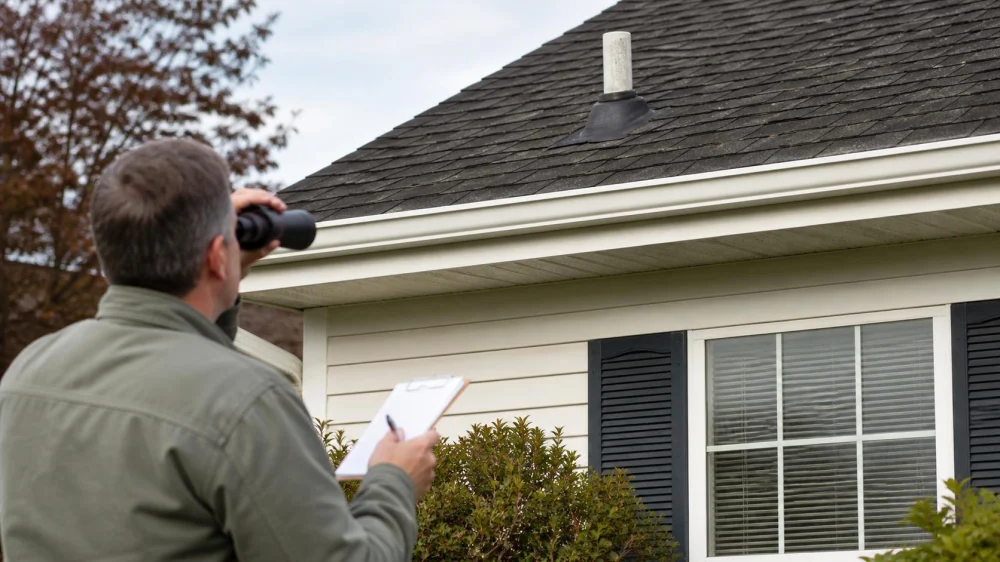
Roof Vent Pipe Boot Cracks: Ground Signs to Record
On this page
Quick answer
A cracked roof vent pipe boot can let rain reach the roof opening around a plumbing vent. From the ground, document a split or lifted collar, gaps around the pipe, distorted flashing, nearby shingle damage, and interior staining below the area. Do not climb up or smear sealant over it. Ask a roofer to inspect the complete flashing, roof deck, pipe position, and water path.
This guide is for United States homeowners with an accessible ground view of a vent penetration on an asphalt-shingle roof. Roof type, vent material, flashing design, slope, climate, and local requirements vary. Roof access and repair should be handled by a properly equipped professional.
What a roof vent pipe boot does
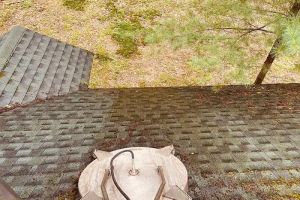
A plumbing vent pipe extends through the roof so the building’s drainage system can function as designed. At the roof opening, a flashing assembly directs water around the penetration. Many assemblies include a flat base integrated with shingles and a raised collar or flexible seal around the pipe.
People often call the assembly a pipe boot, vent boot, roof jack, or vent flashing. These terms can refer to different products. Some use rubber or another flexible collar; others use metal, plastic, lead, or a combination. The correct repair depends on the exact assembly rather than the name used in conversation.
Possible failure points include:
- a split, hardened, shrunken, or displaced flexible collar;
- corrosion, cracking, or deformation in the flashing base;
- improper shingle integration or exposed fasteners;
- a pipe that has moved, settled, or presses against one side of the seal;
- sealant used as the primary water-control detail and now separated;
- hail, debris, animal, ice, or service damage; or
- roof-deck or shingle deterioration around the opening.
A visible collar crack is important, but it may not be the only issue. Water can travel along the pipe, under shingles, or across framing before appearing indoors.

A.C. & Barnes Enterprises, LLC
FrederickFrederick CountyMaryland
6919 D Baltimore National Pike, Frederick, MD 21702, USA
Signs to check from the ground
Use binoculars or camera zoom from stable ground in dry weather. Do not lean from a window, climb a ladder, or walk the roof for a closer look.
- Find the correct penetration. Note its position relative to a chimney, ridge, valley, window, or exterior wall. Several roof pipes may serve different systems.
- Look at the collar. Check for a visible split, gap, lifted edge, uneven contact, or a collar pulled to one side of the pipe.
- Look at the base. Note curling, buckling, rust-like discoloration, a raised corner, or an unusually thick sealant patch.
- Check nearby shingles. Record missing tabs, cracks, exposed-looking areas, fasteners, displaced shingles, or repairs that interrupt normal courses.
- Check pipe position. A pipe that appears tilted, low, unusually tall, or unsupported deserves professional evaluation. Do not push it from inside.
- Compare during rain from indoors. Watch only from a safe interior location for new moisture. Do not stand outside under lightning, wind, hail, ice, or falling debris.
- Photograph the pattern. Take a wide roof view and zoomed details from the same ground point. Record date, weather, and whether rain was wind-driven.
- Check more than one vent. If several similar boots were installed at the same time, document them all for the roofer without assuming they have identical damage.
Do not insert a camera pole, spray water at the roof, run a drone where prohibited or unsafe, or use the plumbing vent as a handhold. A ground inspection is for triage and records, not confirmation of a watertight assembly.
Indoor and attic clues
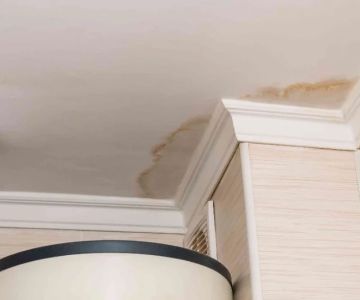
From normal living space, look for ceiling or wall stains, bubbling paint, damp drywall, peeling finish, musty odor, or moisture around a pipe chase. Record whether the clue changes during rain and whether plumbing use changes it. This distinction can help separate roof entry from pipe condensation or a plumbing leak.
If the attic has a permanent safe walkway and can be entered without electrical, structural, heat, pest, or air-quality hazards, look toward the roof penetration without stepping between framing. Use a flashlight and keep hands away from wet wood, wiring, and insulation.
Possible attic clues include:
- water tracks down the exterior of the vent pipe;
- darkened roof decking or framing near the opening;
- damp or matted insulation below the penetration;
- rust on nearby fasteners;
- daylight around an opening; or
- old stains that require moisture testing to determine current activity.
Do not disturb insulation, cut a ceiling, or touch a stain to decide whether it is active. Water near electrical components and sagging ceiling material requires urgent professional attention and an exclusion zone below.
Repair, overlay, or replacement questions
A roofing contractor may recommend replacing the entire flashing assembly, adding a manufacturer-approved repair collar, correcting pipe position, repairing shingles, or addressing damaged decking. The right choice depends on the boot design, roof age and condition, leak history, and compatibility.
Ask the contractor:
- Which component failed: collar, base, shingle integration, pipe, deck, or more than one?
- Will the shingles be lifted or replaced so the flashing can be integrated correctly?
- Is the vent pipe supported, sized, and positioned properly for the new boot?
- Are the boot material and roof system compatible?
- Is a repair collar approved for this assembly, or is it only a temporary overlay?
- How will wet decking, insulation, and interior damage be assessed?
- What workmanship and product warranties apply?
- Will before, during, and after photos be provided?
Sealant may be part of a product detail, but a surface bead alone should not substitute for correct flashing. Thick patches can hide cracks, redirect water, complicate later removal, and fail as materials move.
If the roof is near the end of service, replacing one boot may still stop a localized leak, but the contractor should explain how the repair integrates with brittle or worn shingles and whether broader work is likely soon.
When to schedule or escalate service
Schedule a roof inspection for a visible crack, gap, lifted base, repeated sealant patch, tilted pipe, or unknown-age boot even if no interior leak is obvious. Early inspection may limit damage around the penetration.
Request prompt service when a stain grows during rain, insulation is wet, decking appears dark or soft, or water follows the pipe into living space. Move belongings away when safe and use a container under a drip only if the area is clear of electricity and ceiling instability.
Treat it as urgent when water is near a light, outlet, panel, or appliance, a ceiling bulges, the structure appears unstable, or severe weather has created other hazards. Keep people and pets away. A qualified electrician may need to address electrical exposure.
Do not climb onto a wet or storm-damaged roof to cover the boot. Temporary protection should be installed only by trained, equipped professionals when conditions permit.
Evidence and limitations
This article follows common roof-inspection practice: penetrations need a compatible flashing assembly integrated with the roof covering, and surface sealant alone is not a complete diagnosis. Exact details come from the roof-covering and flashing manufacturer, approved installation instructions, and local requirements.
Ground photos cannot prove the leak path, deck condition, pipe support, or shingle integration. Interior stains may come from roof entry, plumbing leakage, or condensation. An on-site roofer and, when needed, plumber or restoration professional should separate those causes.
Frequently asked questions
Can a cracked vent boot leak only during certain rain?
Yes. Wind direction, rainfall intensity, surface tension, roof drainage, and the crack position can affect entry. Intermittent behavior is still worth documenting and inspecting.
Can I put roofing sealant around the pipe myself?
Do not climb onto the roof or assume sealant is the correct repair. The boot may need replacement, pipe correction, shingle integration, or deck repair. An incompatible patch can hide the problem.
Does a ceiling stain directly below the pipe prove the boot failed?
No. Roof water can travel, and plumbing or condensation may follow the same area. The visible stain is a location clue, not proof of origin.
How long should a roof vent boot last?
There is no single lifespan. Material, sunlight, temperature, roof slope, pipe movement, installation, maintenance, and climate all matter. Inspect condition rather than relying only on age.
Can just the rubber collar be replaced?
Some systems allow an approved repair collar, while others need the full flashing replaced. Ask how the proposed component is approved, secured, and integrated with the existing assembly.
Should a plumber or roofer repair it?
A roofer typically handles roof flashing and shingles; a plumber may be needed when the pipe is loose, damaged, incorrectly positioned, or leaking internally. Complex cases may require both trades.
Next steps
From stable ground, photograph the vent boot, surrounding shingles, and roof context, then record weather and any interior clues. Keep away from wet electricity, sagging ceilings, and unsafe attics. Schedule a roofer to inspect the collar, base, shingle integration, deck, and pipe position, and ask for a repair scope that goes beyond simply covering the visible crack with sealant.



 M2J construction LLC5.0 (13 reviews)
 Certified Roofing4.0 (222 reviews)
 Roofing Windows and Siding by 2B Development4.0 (10 reviews)
 Al Thomsen Roofing5.0 (3 reviews)
 H Restoration LLC4.0 (6 reviews)
 Smart Tech Roofing0.0 (0 reviews)
 Roofing for Different Architectural Styles: Choosing the Right Look
 Restoring a Copper Roof: Cleaning, Repairs, and Corrosion Fix Guide
 Why New Flashing Is Required During Roof Replacement
 Roofing Manufacturer's Approved Installer Program: What You Need to Know
 How to Install a Roof Cricket Behind a Complex Wall Intersection: A Detailed Guide
 What is a Roofing Material Recycling Program? Eco-Friendly Disposal