

Roofing Nails in the Yard: A Post-Project Cleanup Check
Table of contents
Quick answer
Keep children, pets, vehicles, and barefoot visitors away until a post-roofing ground check is complete. Photograph visible debris, then ask the contractor to repeat a slow magnetic sweep in overlapping passes across the driveway, lawn edges, planting beds, walkways, and downspout areas. Magnets do not collect every fastener or sharp fragment, so follow with careful visual inspection. Record what is found and request another cleanup if nails continue appearing.

Why stray nails can remain
Tear-off work releases old fasteners, shingle fragments, staples, flashing pieces, and wire from several roof edges. Tarps and catch systems reduce spread but do not eliminate it, especially in wind, dense plants, gravel, mulch, decks, or neighboring property. Delivery packaging and new-material installation add other debris. A final magnetic sweep is important, yet stainless, aluminum, copper, and some broken materials may not respond to a magnet.
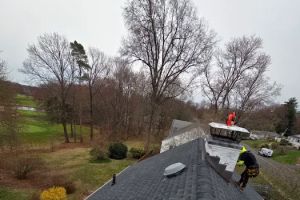
Elite Roofing CT LLC
New HartfordNorthwest Hills Planning RegionConnecticut
6 Hidden Hill Rd, New Hartford, CT 06057, USA
Secure the area first
Park away from the drop zone and do not mow, rake aggressively, or use a leaf blower before inspection because equipment can launch sharp debris. Keep pets leashed and use shoes with firm soles. Do not reach blindly into gutters, shrubs, mulch, or debris piles. For a puncture injury, follow medical guidance; for a tire puncture, photograph the object and location before removal when safe and contact the contractor and tire professional.
Use a documented cleanup grid
- Divide the property into driveway, front, sides, rear, beds, decks, and access route.
- Sweep each zone in slow overlapping lines in more than one direction.
- Lower the magnet near uneven ground without scraping plants or surfaces.
- Pause around staging, dumpster, ladder, and material-cutting locations.
- Empty collected debris into a rigid puncture-resistant container.
- Record date, zone, number and type of items, weather, and person completing the sweep.
Check high-risk hidden zones
Inspect below eaves and rakes, around downspouts, behind air-conditioning units, beneath shrubs, along fence lines, under deck edges, beside steps, in gravel transitions, around the dumpster path, and where workers entered. Check flat hard surfaces at low viewing angles where nails may blend with shadows. Ask permission before entering neighboring property and include shared driveways or sidewalks in the contractor’s plan.
When to request contractor follow-up
Request another sweep when any nail is found after final cleanup, multiple pieces appear in one zone, a vehicle or person is injured, wind moved debris beyond containment, or landscaping prevented access. Ask how the crew will address nonmagnetic metal, roofing fragments, gutters, and concealed zones. Escalate through the project manager and written contract when cleanup is incomplete, and preserve receipts and photos for a documented claim.
Cleanup checklist
Collect project scope, work dates, roof edges, dumpster and staging map, contractor cleanup promise, pre-work photos, zone grid, sweep dates, personnel, magnet type, debris counts, nonmagnetic fragments, property damage, puncture photos, medical or tire records, neighbor communications, disposal method, and final sign-off. Recheck after the first rain, wind, lawn service, and seasonal plant trimming because hidden items can move into view.
Limits and safety notes
This general U.S. guidance cannot certify a property as debris-free or assign legal responsibility. Do not climb, enter active work zones, handle sharp waste barehanded, use power equipment around suspected debris, or expose children and pets during inspection. Magnetic sweepers have blind spots and material limits. Follow the roofing contract, local waste rules, property boundaries, healthcare instructions, tire-service advice, and qualified contractor safety procedures.
Evidence notes
A strong cleanup record ties each sweep to a mapped zone, direction, date, conditions, debris count, and follow-up. Wide photos establish location and close photos show the item. Repeated findings in the same area can guide a slower search beneath the related roof edge. A contractor’s written checklist plus homeowner observations is more useful than a generic statement that the crew “ran the magnet.”
Frequently asked questions
Will a magnetic sweeper find every roofing nail?
No. Depth, orientation, vegetation, surface texture, magnet height, and metal type affect collection.
Can I mow after one sweep?
Wait until visual and magnetic checks are complete and the contractor has addressed remaining debris.
Where are nails most often missed?
Mulch, gravel, shrubs, downspouts, fence lines, deck edges, staging paths, and surface transitions need extra attention.
What should I do with collected nails?
Place them in a rigid puncture-resistant container and follow local disposal and contractor procedures.
How long should I keep checking?
Recheck after weather and landscaping disturbance and whenever another item appears. The contract may define additional cleanup duties.
Next steps
Restrict the area, map the property, have the contractor complete overlapping magnetic and visual checks, record every item, and request a return sweep for any later finding. Reinspect high-risk zones after rain, wind, mowing preparation, and plant trimming. Preserve photos, counts, receipts, and written communications if a puncture or incomplete cleanup requires follow-up.




 HONDUMARK LLC5.0 (6 reviews)
 Carter Brothers Roofing LLC4.0 (31 reviews)
 R Stevens Commercial Roofing Inc5.0 (31 reviews)
 DONE RITE roofers4.0 (103 reviews)
 Gutama Home Improvement4.0 (9 reviews)
 Majestic Exteriors, LLC4.0 (241 reviews)
 How to Choose the Best Roof Color for Your Home: Energy Efficiency and Curb Appeal
 How to Prevent Roof Damage from Tree Root Systems Underneath the Structure
 What is a Roofing Project Completion Certificate? For Insurance and Records
 How to Install Roofing Felt Underlayment Correctly
 How to Install Roof Ice Melt Systems to Prevent Ice Dams
 How to Install Step Flashing on a Roof Valley or Wall Intersection | BeachCo Roofing Hub