
Old Satellite Dish Removal: Plan the Roof Repair First
Table of contents
Quick answer
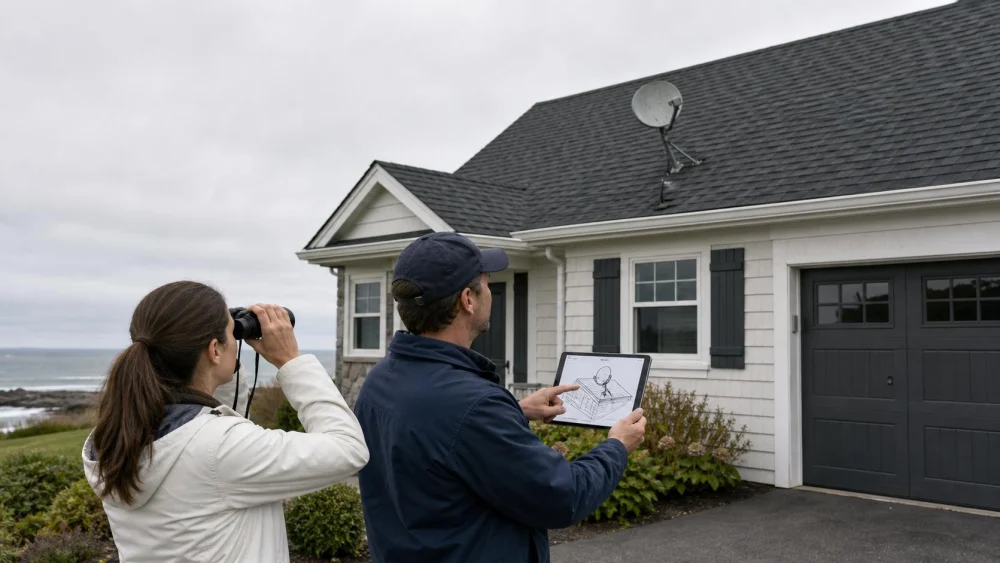
Plan the roof repair before removing an unused satellite dish. Its mast, braces, cable clips, and fasteners may penetrate shingles, flashing, siding, fascia, or decking. Cutting off the dish and leaving the mount—or smearing sealant over old holes—can hide water paths and future corrosion. Photograph the system from the ground, identify every attachment and cable route, and hire a qualified contractor to remove components and restore the exact roof assembly.
B&E roofing and siding
BrookhavenDelaware CountyPennsylvania
104 Virginia Ave, Brookhaven, PA 19015, USA
Why removal needs a roof plan
A dish may be mounted on a roof slope, eave, wall, chimney, or freestanding pole. The visible mast is only part of the installation; support feet, lag screws, wire anchors, grounding hardware, and entry points can remain. Roof age and material matter because brittle shingles, metal panels, tile, low-slope membranes, and older repairs need different techniques. Removal can also affect a roof warranty, lease, service contract, or homeowners association rule.
Document the installation from the ground
- Photograph the whole roof face and close views using camera zoom.
- Mark the mast, braces, cable clips, grounding wire, and building entry point.
- Note rust, loose parts, lifted roofing, staining, and movement in wind.
- Find service-provider, installer, roof, warranty, and property records.
- Check ceilings and safely accessible attic areas for moisture signs.
- Do not climb, pull cables, disconnect grounding, or test whether the mount is loose.
What a complete repair may include
The contractor may need to remove the dish, mast, braces, anchors, and abandoned cable; inspect shingles or other covering; evaluate flashing, underlayment, and decking; replace damaged materials; close penetrations using a system-compatible detail; and match fasteners and sealants to the roof product. A surface dab of general caulk is not equivalent to restoring layered water shedding. Repairs should be documented before concealed layers are covered.
Trace cables without creating new damage
Coaxial cable may cross gutters, siding, soffits, walls, attic spaces, or utility areas. Confirm whether any cable still serves internet, television, antenna, security, or another system before removal. Do not pull a cable through a sealed penetration because it can damage flashing, insulation, wiring, or interior finishes. Grounding and bonding components should be identified by a qualified person, and wall entry points need weather-resistant closure appropriate to the material.
Choose the right contractor
Ask a roofer about the covering and penetration repair, and coordinate with a communications or electrical professional when active service or grounding is uncertain. Verify licensing and insurance as locally required, roof-product experience, fall protection, debris control, weather plan, warranty, and photo documentation. Clarify who owns the dish, who disposes of electronics, and who repairs interior or siding openings. Avoid a bid that removes hardware without describing the roof detail.
Removal checklist
Collect property authorization, provider status, roof type and age, warranty, installer records, attachment map, cable and grounding map, interior observations, contractor scope, material list, permit or association needs, weather date, fall protection, debris control, before-and-after photos, disposal receipt, and written repair warranty. Ask for photos of the deck and underlayment before new roofing covers the area.
Limits and safety notes
This general U.S. guidance cannot identify live service, electrical grounding, structural condition, asbestos, lead, or the correct repair for a specific roof. Do not climb, cut, unbolt, pull cable, disturb grounding, or work near overhead lines. Dish hardware can be sharp and unstable, and roof access requires fall protection. Follow property authorization, service-provider rules, local codes, roof manufacturer details, utility guidance, and qualified contractor findings.
Evidence notes
A reliable repair record connects every removed attachment to its location and restoration method. Wide photos show context, close photos show fasteners and water paths, and progress photos show the substrate, underlayment, flashing, and replacement covering before concealment. Product instructions and the existing roof assembly provide stronger evidence of compatibility than an unspecified “sealed holes” invoice.
Frequently asked questions
Can the dish be cut off while leaving the mount?
That may leave penetrations and corroding hardware. Have the complete assembly and repair plan assessed.
Will roofing cement over the holes be enough?
Not necessarily. The layered roof covering, underlayment, flashing, and deck may need system-specific repair.
Who should remove the cable?
Confirm whether it is active and coordinate the service provider, roofer, and qualified electrical or communications professional.
Can the old dish be recycled?
Rules vary by material and locality. Ask the contractor or local electronics and metal recycling program.
Should removal wait for roof replacement?
Possibly, but loose hardware, leakage, or corrosion may require earlier action. Ask a roofer to compare options.
Next steps
Confirm ownership and service status, photograph every attachment and cable route from the ground, gather roof and warranty records, and request a written removal-and-restoration scope. Coordinate active cable and grounding questions, require progress photos, and inspect the completed work records rather than accepting an unexplained surface patch.

 NYC Best Roofing Inc.5.0 (3 reviews)
 NVR and Son Contractors, LLC5.0 (7 reviews)
 Chris The Roofer4.0 (54 reviews)
 Perfect roofing0.0 (0 reviews)
 L&M Company4.0 (6 reviews)
 KRB Contractors3.0 (6 reviews)
 How to Choose a Roof Color for a Multi-Unit Residential Building
 How to Repair a Roof Leak Around a Plumbing Vent
 The Pros and Cons of Green Roofs or Living Roofs: A Comprehensive Guide
 How to Install Roof Decking (Sheathing) Properly: A Comprehensive Guide
 How to Repair a Roof Leak from a Rooftop Balcony or Deck Drainage System
 How to Install a Roof Cricket on a PVC Roof Membrane